Author: Geofrey Banzi, Legal Technologist, Big Four

  • From One-Shot Answers to Autonomous Workflows: Six Stages of AI

    From One-Shot Answers to Autonomous Workflows: Six Stages of AI

    The 30-second briefing

    AI used to answer individual questions. It can increasingly carry out whole workflows. What changed is not just the quality of the answer: AI can now access knowledge, use software tools, plan a sequence of steps and work towards an outcome.

    Why it matters: Businesses should stop asking only “How can staff use AI?” and start asking “Which parts of our workflows can AI reliably complete?”

    The important distinction: More capability does not automatically justify more independence. Permissions and oversight still matter.

    One task. Six shifts in capability.

    Prompt → Dialogue → Knowledge → Tools → Plan → Outcome

    At each stage, more of the steps between an instruction and a completed task can be performed by AI.

    In our guide to the six SAE levels of self-driving cars, each level showed how more of the driving task could pass from human to machine. AI presents a similar question for knowledge work: how much of the task can software now carry through itself? Unlike SAE driving levels, the six AI stages below are a WiBrief teaching framework, not an official standard.

    The six stages: from prompt to completed workflow

    01 — Answer

    A single prompt produces a response. Human work: ask, assess, copy, act and initiate the next prompt.

    Client proposal example: “Write an introduction to a client proposal.”

    02 — Converse

    The assistant carries context across a discussion, clarifies requirements and improves an answer over several turns. Human work: steer the conversation and execute the task.

    Client proposal example: “Ask me about the client, then refine the introduction.”

    03 — Retrieve

    The assistant searches connected sources to ground its work in documents, facts and precedents. Human work: verify evidence and apply the result.

    Client proposal example: “Find relevant previous fee proposals and use them as references.”

    04 — Use tools

    The system can call approved software functions, APIs and integrations, potentially via MCP. It can take specific actions rather than only recommend them. Human work: specify tasks, grant access and review consequential actions.

    Client proposal example: “Retrieve approved records from SharePoint and create a working draft.”

    05 — Plan and coordinate

    Given a goal, an agent can select and sequence multiple tools, inspect results and revise its plan when something fails. Human work: define objectives, constraints and exceptions.

    Client proposal example: “Search precedents, draft the proposal, check pricing rules and flag missing details.”

    06 — Complete workflows

    Within pre-agreed scope, an agent or collection of agents can run a workflow from request to defined outcome, including monitoring progress and escalating exceptions. Human work: set policy, approve high-impact decisions and supervise outcomes.

    Client proposal example: “Prepare the proposal package, route it for approval and finish the internal workflow.”

    The change in one picture

    In the early stages: Human → AI answer → Human completes the work.

    In the middle: Human → AI uses knowledge and tools → Human reviews progress.

    At the advanced stages: Human sets goal and boundaries → AI plans and executes steps → Human supervises outcomes and exceptions.

    This is a functional progression, not a strict historical timeline: conversation, retrieval and tool-use capabilities overlap, and autonomy depends on the system’s design and permissions.

    What actually made this possible?

    Model capability improved reasoning and instruction-following; longer context and retrieval helped systems work with relevant information; tool calling and MCP-style connections opened access to software; and agent architectures added loops for planning, acting, observing and correcting. None of these alone guarantees reliable autonomy.

    What UK research says

    The UK government’s AI Insights: Agentic AI, updated in August 2026, explains how language-model capabilities combine with agent architectures to enable systems to select and coordinate actions. The March 2026 consumer research frames the shift as moving from tools that support user decisions towards agents potentially entrusted with outcomes.

    The UK’s AI Security Institute examined more than 1,000 publicly available MCP servers and reported increasing levels of autonomy among newly published finance-related tool interfaces across part of 2025. That is evidence about tooling and permissions, not proof that all deployed agents perform reliably.

    The National Cyber Security Centre advised in May 2026 that organisations should start with tightly bounded, low-risk uses, maintain visibility and retain clear human responsibility. Its 20 October 2026 research problem book update asks how semi-autonomous cyber systems can be evaluated and assured.

    On 9 October 2026 the Local Government Association published a playbook for agentic AI, stressing proportional governance, workforce adaptation and service redesign. On 12 October, the UK government outlined work preparing for serious incidents involving autonomous AI agents. The ICO’s guidance roadmap also identifies agentic AI as a dedicated subject.

    The executive decision

    Take one process with a clear input and outcome. Count how many steps currently require a human. Identify which steps AI can perform safely today, which need approval, and which are not ready for delegation. Measure completed outcomes, not impressive demonstrations.

    The destination is not a smarter chatbot. It is a dependable system capable of completing useful work.

    Research and further reading

    Editorial note: This six-stage framework is an explanatory model developed for WiBrief. It should not be confused with a regulatory classification or a validated capability benchmark. Sources checked 22 October 2026.


    Explore related WiBrief research

    Explore how these autonomy levels translate into real-world decision processes in the Autonomy and AI research hub. Experience the trade-offs directly in the interactive Autonomy Atlas.


  • Beyond the Prompt: Designing Systems That Think With Us

    Beyond the Prompt: Designing Systems That Think With Us

    AI is becoming increasingly capable at producing answers. Yet organisations still struggle with a more consequential question: how do we turn those answers into decisions we can trust?

    The missing layer between intelligence and impact

    Consider a team adopting generative AI. One person uses it to summarise meetings; another drafts proposals; a third analyses documents. Each task becomes faster. But nothing necessarily connects the meeting to the proposal, the proposal to the decision, or the decision to what the organisation learns next.

    The limitation is not simply the model. It is the absence of a deliberate system connecting evidence, expertise, action and feedback.


    The decision intelligence loop

    CAPTURE → STRUCTURE → EVALUATE → DECIDE → LEARN

    Evidence becomes structured options. Human judgement determines action. Outcomes improve the next decision.


    A practical architecture for better decisions

    • Capture: Collect the relevant facts, assumptions and sources at the point where work happens.
    • Structure: Translate scattered observations into comparable opportunities, risks and options.
    • Evaluate: Assess each option against explicit criteria such as impact, effort, confidence and ethical consequences.
    • Decide: Make responsibility visible. AI may inform a decision; it should not silently inherit authority to make it.
    • Learn: Compare what was expected with what actually happened, and update the process.

    This is a decision system: a repeatable pathway from information to accountable action. AI can accelerate every stage, but the pathway itself is a design choice.

    Why prompts alone are insufficient

    A prompt is an instruction within a moment. A system preserves continuity across moments. It can carry provenance, constraints, ownership, escalation routes and feedback. This distinction matters wherever outcomes must be explained, challenged or improved.

    For example, when designing a client proposal, the important question is not merely whether AI can draft persuasive copy. It is whether the team can trace which client needs, prior examples, pricing assumptions and human approvals informed the final proposal.

    Three tests for responsible design

    • Traceability: Can someone reconstruct the evidence behind a recommendation?
    • Contestability: Can a knowledgeable person question, reject or override it?
    • Learning: Does the system improve from real outcomes rather than from confidence alone?

    These are practical tests, not guarantees. A neatly structured workflow can still encode poor assumptions or institutional bias. Good governance therefore requires periodic examination of who benefits, who bears risk and whose perspectives are missing.

    Build one small decision loop this week

    Choose one recurring decision in your work. Write down its inputs, the criteria used to assess options, the person accountable, and the outcome you will check later. Only then ask where AI could remove friction. You may discover that the highest-value improvement is not a more sophisticated model but a clearer hand-off or a more consistent evaluation method.

    The future of effective AI adoption may be determined less by how fluently machines respond and more by how deliberately we design the human systems around them.


    Explore related WiBrief research

    For a visual investigation of delegated decision-making and oversight, visit the Autonomy and AI research hub. Experience the trade-offs directly in the interactive Autonomy Atlas.

  • Build Your Own Digital AI Assistant Today—And Transform the Way You Work

    Build Your Own Digital AI Assistant Today—And Transform the Way You Work

    1. Introduction: The Dawn of a New Era

    The Digital Revolution. When Apple introduced the iPhone, it wasn’t just about making calls. It changed how we work, learn, shop, navigate, and even how we relax. It made the internet personal.

    Now, we’re on the edge of another leap forward—this time with artificial intelligence. But instead of fitting into one device, AI has the potential to fit around you. The real magic? Custom GPTs. These are AI assistants tailored to your preferences, your data, your goals.

    Much like the shift from landlines to smartphones, we’re shifting from generic AI to personalised, reliable assistants that can enhance productivity in ways that feel surprisingly human.

    2. What Is a Custom GPT Persona?

    A GPT persona is a customised version of a general AI assistant like ChatGPT. Instead of just answering questions with whatever information it can recall, a persona is:

    • Aligned with your tone, style, or domain
    • Pre configured with your custom instructions, documents and preferences
    • Built to follow certain rules or avoid specific mistakes

    Think of it like your own digital co-worker who already knows how you think, what you care about, and how you like things done each time you use it.

    Just like Netflix recommends based on your viewing habits, a GPT persona can:

    • Help you prepare presentations from your notes
    • Answer questions from your uploaded course textbook
    • Provide health insights based on your fitness data
    • Extract the “important bits” from long contracts
    • Draft emails, lesson plans, or research summaries the way you would

    You don’t need to be technical to shape AI. You just need to be clear about what you want it to do—and where you still want to stay in control. Because the real risk isn’t AI doing too little. It’s AI quietly making decisions for you.

    🖼️ Where to Start: Build Your Own GPT Assistant
    Visit https://chat.openai.com/gpts and click “Explore GPTs” to browse examples or “Create a GPT” to build your own in minutes—no code required.

    Use the guided builder to define its tone, purpose, and upload key documents or links. You can even give it a name and a profile picture!

    3. What Powers This? Meet RAG (Without the Jargon)

    Behind the scenes, many custom GPTs are supercharged with something called Retrieval-Augmented Generation (RAG). Don’t let the name scare you.

    All it means is this:

    • You can upload your own content (a PDF, notes, slide decks)
    • Or, link it to web pages or online sources you trust
    • The AI then uses that content, not just what it was pre-trained on

    So instead of generic or outdated info, the assistant pulls exactly what it needs from your sources.

    🔍 Real-Life Uses of RAG + Personas

    These combinations unlock powerful everyday tools:

    • 🏋️ Fitness Coach GPT: Upload your health plan or workout logs and talk to a coach that helps you stay on track and explains your stats.
    • 📚 Study Buddy GPT: Upload your course curriculum and textbooks—ask questions, quiz yourself, and get summaries tailored to your syllabus.
    • 📅 Presentation Assistant GPT: Drop in your research or agenda and get a draft presentation, bullet points, or speaker notes.
    • 🔒 Contract Navigator GPT: Upload a bunch of boilerplate contracts and get the unusual or noteworthy provisions flagged for you.
    • 📜 Personal Researcher GPT: Paste in reports, links, or documents, and it will help summarise, compare, or explain them in your preferred format.

    These are low-barrier, high-impact applications. No coding. No jargon. Just results that make sense for you.

    But remember: AI sees patterns. It doesn’t feel instinct. It might catch six common risks in a document—but miss the one that’s subtly phrased, buried in boilerplate, or just feels off. That’s why your judgment still matters.

    4. Multiple Personas, Working as a Team

    Now imagine this: not just one assistant, but a team of them working behind the scenes.

    • One gathers relevant info
    • Another analyses and drafts
    • A third reviews and refines

    This is already happening across industries. And it’s how professionals are getting reliable, repeatable results from AI—the kind you can trust.

    But it’s just as relevant for students, retirees, freelancers, or anyone managing tasks that require judgment, organisation, or insight.

    And just like a GPS uses traffic data to help you avoid delays, your personas can adapt in real time, making your work smoother, smarter, and more aligned with how you think.

    5. Don’t Forget the Human Touch

    AI is fast. Sometimes too fast.

    It’s tempting to accept whatever it gives you—especially when it sounds confident. But speed doesn’t equal accuracy.

    Think of AI like a smart intern: helpful, yes—but you still need to review its work. A model might flag six obvious red flags in a contract… but miss the one that’s subtle, strange, or completely unexpected. That’s where your judgment matters most.

    So as you delegate to AI, don’t outsource your thinking. Build in moments to pause and ask:
    “Is this right?”
    “Is anything missing?”
    “Would I say it this way?”

    That’s not friction. That’s good decision-making.

    AI should amplify your instincts—not override them.

    6. The Takeaway

    Custom GPTs are more than cool tech. They’re a way to bring clarity, speed, and insight to your everyday work and life.

    We no longer need to adapt to AI. Now, AI can adapt to us.

    And the real productivity boost isn’t just from automation. It’s from intelligent delegation—handing off the repetitive parts of your work so you can focus on what matters: judgment, creativity, strategy.

    Whether you’re a teacher prepping lessons, a student revising for finals, or a founder writing investor updates, the question is the same:

    “Is this AI helping me think better—or just think less?”

    The best custom GPTs don’t just save time. They sharpen your focus, elevate your thinking, and help you do more of what only you can do.

    If the iPhone put the world in your pocket, custom GPTs put you at the centre of your digital universe.


    Continue exploring

    Custom AI assistants are one step along a broader spectrum of machine autonomy. See how the stages of delegation fit together in the Autonomy and AI research hub, and investigate decision authority in the interactive Autonomy Atlas.

  • 💡 Beyond the Prompt: Why Strategic Judgment Remains Our Greatest Asset

    💡 Beyond the Prompt: Why Strategic Judgment Remains Our Greatest Asset

    TL;DR

    As GenAI digital assistants—such as Microsoft Copilot, vendor-specific versions of ChatGPT, and internal firm models—embed themselves into legal workflows, the question is no longer “Should I use AI?” It’s: How do we design it to enhance—not override—judgment? The future of professional services depends not just on what AI can do, but on how we choose to think.

    ⚖️ From Oversight to Ownership

    In professional services, our value has never been just in what we know—but in how we frame, filter, and challenge complexity. The rise of GenAI digital assistants doesn’t erase that—it raises the stakes.

    Because even if:

    • AI proposes a new content and structure based on your parameters,
    • Ranks risk based on frameworks you define,
    • Surfaces insights drawn from analogue experience…

    The question remains:

    Are you still making the key decisions—or just reviewing what the system has already prioritised for you?

    This is what I call judgment drift—not losing control outright, but gradually letting automated systems decide what matters most in professional decisions—without continuous, active human evaluation for real-world relevance.

    🔍 A Real-World Example

    AI can quickly scan hundreds of pages and flag six familiar risks—termination clauses, liability caps, change-of-control provisions. But what about the seventh? The one that doesn’t follow the usual pattern. The clause phrased just differently enough, buried in boilerplate, or introduced in passing by a counterparty. That’s the one the model might miss—and the one a sharp human spots, because it feels off.

    In high-stakes negotiations, using GenAI to draft too early can give the illusion of a well-framed position—when in reality, it’s just a statistically likely one. That false confidence can lock you into assumptions on liability, pricing, or responsibility—before you’ve aligned the output with your client’s goals, strategy, or leverage.

    The result? Time saved, but oversight lost.

    That’s why the goal isn’t automation for its own sake. It’s intelligent delegation—with human judgment guiding what to review, when to slow down, and where to challenge the default.


    ✨
    Story Moment: Friday Evening. 900 Pages. No Panic.

    You’ve lived this.

    It’s late Friday. A critical deliverable just landed—a 900-page document, a dataset, a transaction report. It needs to be reviewed, structured, and summarised by Monday.

    Old world? Two team members brace for a lost weekend. New world? Your organisational GenAI assistant processes the file, extracts what matters, flags inconsistencies, and delivers a structured first-draft summary—in your specified standard format—before you even log off.

    You’re not replacing expertise. You’re reclaiming it—for strategy, not survival.


    🛠️
    What Should Professional Services Do Next?

    1. Shift from Passive Tool Use to Active Role Design

    Don’t just use AI—author it. Define the assistant’s role, purpose, tone, steps to perform and boundaries. Gen AI tools perform better when shaped by clear context and intentional structure—not guesswork.

    2. Preserve Cognitive Friction

    Build in moments to pause, question, and challenge what the Gen AI system returns. Good judgment doesn’t come from seamless flow—but from thoughtful interruption.

    3. Create Frameworks Worth Scaling

    Treat every effective Gen AI setup as a blueprint—and build from there. Curate prompts that work, regardless of the platform. Adapt and improve them.Document the logic. Share the method.Build systems others can trust—and scale.


    🧭
    Why This Matters

    GenAI is no longer speculative—it’s operational.

    The professionals who will lead this shift aren’t the ones who use AI fastest. They’re the ones who ask:

    • What’s being missed?
    • Who is really in control?
    • Does this support or replace my judgment?

     and most importantly:

    Is it amplifying your expertise—or quietly eroding the very judgment your clients rely on?

    #StrategicJudgment #GenAI #HumanInTheLoop #LegalInnovation #AIAndEthics


    Continue exploring

    Human judgement becomes even more important as autonomous systems move from recommending actions to carrying them out. Explore the Autonomy and AI research hub, and investigate decision authority in the interactive Autonomy Atlas.

  • Top 10 Predictions Shaping Legal, AI & Human Agency (2025–2028)

    Top 10 Predictions Shaping Legal, AI & Human Agency (2025–2028)

    Top 10 Predictions Shaping Legal, AI & Human Agency (2025–2028)


    TL;DR

    As GenAI remakes the legal and professional landscape, the competitive edge is shifting from mere automation to intentional, governed innovation. The winners will be those who embed robust oversight, transparent validation, and dynamic governance frameworks into the very fabric of their work—reclaiming human agency and public trust.


    1. Human Oversight as a Competitive Service

    By 2028, “human oversight” will be as marketable as legal expertise or technological prowess. Clients will increasingly demand visible, auditable proof of where, when, and how critical human judgment is applied—spanning from contracts to compliance reviews. “Oversight-as-a-Service” will become a selling point, with governance models showcased in RFPs and public disclosures.


    2. Governance Becomes the DNA of Innovation

    No longer a compliance afterthought, governance moves to centre stage—shaping not just what gets built, but how it’s built, tested, and scaled. Law firms and legal tech teams will institutionalise dynamic governance: real-time feedback loops, champion validation, transparent escalation protocols, and proactive audit trails. This enables both safe experimentation and trusted adoption.


    3. Strategic Cognitive Offloading Defines Talent Value

    The most valued professionals will not just use AI, but demonstrate discernment—knowing when to offload to machines and when to intervene as a human. Expect advancement frameworks to explicitly reward this judgment, codified through governance structures that track, review, and continuously recalibrate the human-AI handoff.


    4. Kitemarked Outputs and Visible Validation

    “Human Oversight Certified” seals and similar kitemarks will become compliance baselines in legal, audit, and high-risk advisory work. These markers, only awarded through transparent, traceable validation frameworks, will be a sign of trust—not mere decoration.


    5. The Return of ‘Slow Work’—By Design, Not Default

    To counteract the deskilling risks of automation, leading firms will set up deliberate slow lanes: protected time and space for deep legal analysis, mentorship, and creative reasoning. These slow work zones will be governed for quality—tracked and measured, not left to chance.


    6. Outcome-Based Pricing—Driven by Transparent Process

    AI-enabled productivity will accelerate the move away from the billable hour. Value-based pricing will require transparency about how work is delivered—AI, human, or hybrid—and governance documentation that clients can review.


    7. Living Sensemaking Hubs Replace Static Knowledge Bases

    Platforms like WiBrief will move from static content to living foresight engines, integrating scenario modeling, prediction scoring, and transparent governance of how insights are generated and validated. This continual auditability will be a marker of platform trust.


    8. Public Self-Audit and Transparent Reflection

    Annual self-audits, open prediction scoring, and reflective learning cycles will become professional norms. Firms will publicise both successes and misses—anchoring trust in governed humility, not just glossy marketing.


    9. Bias Exposure Drives Radical Transparency in Legal Advice

    AI will illuminate unseen biases in both algorithmic and human outputs. The most trusted organisations will not just acknowledge this risk, but embed bias detection and remediation in their governance models, making correction and learning as visible as outcomes.


    10. Leadership Redefined: From Command to Coherence

    The new leaders will not be those who control more AI, but those who engineer coherence—integrating ethical frameworks, oversight rituals, and transparent governance into every layer of decision-making. Strategic enablement sprints, champion-driven reviews, and participatory governance will distinguish cultures that thrive.


    The Golden Thread:

    In every prediction above, robust governance is not a box to tick—it is the architecture of trust. The firms and professionals who make their frameworks visible, participatory, and continuously evolving will shape the next decade—not just by what they predict, but by how they keep themselves accountable to those predictions.

    🧭 Ready to benchmark your own approach? Explore the WiBrief GenAI Governance Compass — a practical, self-assessment framework to help leaders, teams, and organisations navigate responsible GenAI adoption and innovation.


    Big Question for 2025–2028:

    Are you just adopting GenAI—or are you building a living system where innovation, judgment, and governance rise together?


    #LegalInnovation #Governance #AI #HumanOversight #Prediction #KPMG #WiBrief #Trust #ProfessionalServices #Ethics #DigitalTransformation


    Explore related WiBrief research

    Explore an interactive demonstration of these decisions and discover how authority shifts in the Autonomy and AI research hub. Experience the trade-offs directly in the interactive Autonomy Atlas.
  • 🧭 WiBrief GenAI Governance Compass

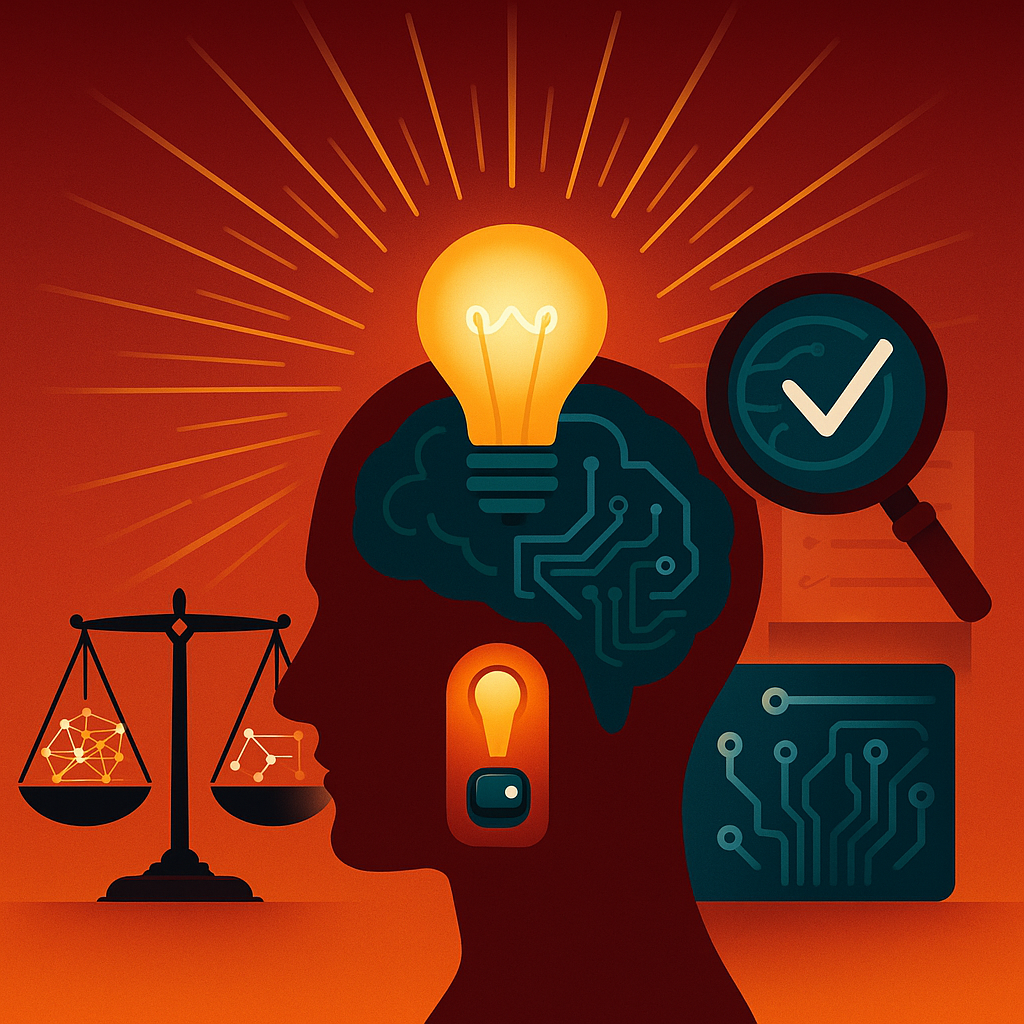
    🧭 WiBrief GenAI Governance Compass

    Benchmark your readiness. Navigate responsible innovation.

    As organisations race to adopt generative AI, the difference between thriving and stumbling isn’t just technology—it’s governance. This self-check tool enables leaders, teams, and innovators to evaluate current practices, identify gaps, and set a principled course for trustworthy, high-impact AI adoption.

    Use this Compass to align your strategy, processes, and culture with the standards that will define tomorrow’s most trusted organisations.


    1. Clear Purpose and Role Definition

    • Are the objectives, boundaries, and expected outcomes of your project explicitly documented?
    • Are all key roles (owners, validators, reviewers) clearly assigned and communicated?

    2. Structured Idea Capture

    • Is there an open, documented process for collecting and recording new use cases, challenges, or improvements from all stakeholders?
    • Are proposed ideas logged transparently in a central repository?

    3. Responsible Prototyping and Risk Awareness

    • Are new ideas moved quickly from concept to draft—while identifying risks, data requirements, and oversight needs at each step?
    • Is there a framework for assessing risk and value before scaling or deployment?

    4. Independent Validation

    • Does each major output undergo review by a qualified expert or peer, independent from its creator?
    • Are feedback cycles documented, with a clear record of decisions and improvements?

    5. Transparent Feedback and Iteration

    • Is regular review and retrospective discussion built into the process, ensuring that lessons and concerns are surfaced and addressed?
    • Are critical issues or deviations flagged early and managed transparently?

    6. Auditable Oversight

    • Are oversight and validation steps clearly documented and visible to all relevant parties—including clients, where appropriate?
    • Is there traceability of decision points and interventions throughout the lifecycle?

    7. Continuous Self-Audit and Reflection

    • Are outcomes periodically assessed and reported, both for successes and learning opportunities?
    • Is there a culture of open reflection, transparency, and accountability around both achievements and setbacks?

    Self-Assessment (Rate 1–5 for Each Area)

    • 1 = Not evident
    • 3 = Partially in place
    • 5 = Fully embedded

    Scoring Guide:

    • 30–35: Governance Pioneer – Strong, consistent frameworks support trusted, resilient innovation.
    • 22–29: Progressing – Key governance elements present; targeted improvements will enhance trust.
    • 15–21: Developing – Governance is emerging but uneven; focused attention required.
    • Below 15: At Risk – Gaps may expose the organisation to avoidable risks and erode stakeholder trust.

    Reflection & Next Steps

    • Which governance area is your greatest strength—and which needs the most urgent attention?
    • What practical action can you take this quarter to strengthen your governance baseline?
    • Consider sharing your results (anonymously or otherwise) to contribute to a wider culture of transparency and improvement.

    #WiBrief #Governance #AITrust #LegalInnovation #SelfAudit #Accountability #ProfessionalServices


    Explore related WiBrief research

    Put the governance questions into a broader context by exploring our Autonomy and AI research hub. Experience the trade-offs directly in the interactive Autonomy Atlas.

  • 🌍 🔑Unlock AI’s Potential: Your Essential Guide to Public Tools for Ethical Innovation and Compliance

    🌍 🔑Unlock AI’s Potential: Your Essential Guide to Public Tools for Ethical Innovation and Compliance

    🚀 Artificial Intelligence (AI) is not just changing the game—it’s transforming the entire playing field. 🌍 From healthcare breakthroughs to smarter financial systems, AI is driving innovation and efficiency at an unprecedented pace. But with this rapid advancement comes a crucial responsibility: ensuring that AI is used ethically, safely, and within the bounds of robust regulatory frameworks.

    This page is your comprehensive guide to some of the most powerful, publicly accessible AI tools. Here, you’ll uncover the cutting-edge functionalities of these tools, explore their potential risks, and understand the regulatory frameworks that will help you navigate this complex and dynamic field. Whether you’re a developer, researcher, or AI enthusiast, this guide is designed to keep you informed and ahead of the curve.

    🔍 Category🛠️ AI Tool/Platform💡 Description🌟 Why It Matters📜 Regulatory Considerations🔗 Learn More
    🔓 Open-Source AI ModelsHugging FaceA hub for community-driven models and datasets now featuring integrations with GPT-4.5 and advanced multimodal models.Democratizes AI innovation and enables collaborative development across industries.Supports ethical open-source licensing and aligns with emerging global transparency standards.🔗 Visit Hugging Face
    Stable Diffusion 3.0The latest diffusion model that generates high-quality images with improved text-to-image coherence.Empowers creative industries and commercial applications with cost-effective, rapid image generation.Requires strict adherence to updated copyright and ethical guidelines for content generation.🔗 Explore Stable Diffusion 3.0
    BLOOM 2.0A multilingual transformer with enhanced efficiency and transparency in training methods.Bridges linguistic and cultural gaps, fostering global collaboration in AI research.Operates under Responsible AI Licences that meet international fairness and transparency standards.🔗 Explore BLOOM 2.0
    🧠 Large Language Models (LLMs)GPT-5 (OpenAI)Next-generation model integrating chain-of-thought reasoning and multimodal inputs with enhanced efficiency.Revolutionizes content creation and complex problem solving with unified pipelines and cost-effective APIs.Must adhere to evolving guidelines on bias, transparency, and data privacy as part of global AI assurance efforts.🔗 Explore GPT-5
    Claude (Anthropic)An ethically aligned LLM with enhanced bias mitigation and robust safety features.Prioritizes user safety and trust, making it ideal for applications requiring high ethical standards.Operates under stringent ethical guidelines and regulatory frameworks focused on fairness and accountability.🔗 Access Claude
    🖼️ Multimodal ModelsSORA 2.0An advanced multimodal model that processes text, images, and video in real time with enhanced integration.Transforms digital media by enabling seamless synthesis of diverse data modalities for innovative applications.Must comply with updated intellectual property and content creation regulations while following AI assurance protocols.🔗 Learn about SORA 2.0
    ⚙️ Specialized AI ApplicationsLangChain & AutoGenFrameworks that integrate multiple AI models into cohesive, multi-agent workflows for complex tasks.Enhance operational efficiency and enable scalable automation across enterprises.Designed to meet global regulatory standards on transparency and algorithmic accountability.🔗 Learn about LangGraph & AutoGen
    Rightbrain.aiA no-code/low-code platform for rapidly deploying integrated AI workflows in enterprise settings.Enables businesses to prototype and deploy AI solutions quickly, reducing time-to-market and operational costs.Incorporates robust data security and compliance features aligned with evolving international standards.🔗 Explore Rightbrain.ai
    🔊 Text-to-Speech & Voice ModelsSpeechVerse 2.0An upgraded speech model offering real-time transcription and high-fidelity voice synthesis.Breaks communication barriers and enhances accessibility across diverse user demographics.Ensures strict compliance with data protection and privacy laws governing voice data.🔗 Learn about SpeechVerse 2.0
    🎥 Text-to-Video / Image-to-VideoImageBind 2.0 (Meta AI)An advanced model capable of synthesizing video from text and images, supporting six simultaneous modalities.Transforms media production by enabling realistic video synthesis for entertainment and enterprise use.Requires adherence to international copyright and content moderation standards.🔗 Learn about ImageBind 2.0
    📚 Authoritative Research ForumsArxiv.orgA premier source for accessing real-time updates on cutting-edge AI research and preprints.Drives innovation by making state-of-the-art academic research accessible to both practitioners and regulators.Widely referenced in global regulatory discussions and research initiatives.🔗 Explore AI Research on Arxiv
    🛡️ AI Assurance & RegulationAI Assurance (UK Govt.)Guidelines ensuring that AI systems operate safely, transparently, and ethically across industries.Builds consumer trust and supports organizations in meeting stringent global regulatory standards.Aligned with updated UK and international AI assurance and governance frameworks.🔗 Introduction to AI Assurance
    🔐 Global Regulation TrackerWhite & Case AI WatchA dynamic platform tracking AI regulatory developments across the globe, including updates from the US, EU, and China.Essential for businesses navigating diverse, rapidly evolving international regulatory landscapes.Offers real-time insights into legislative changes and compliance strategies worldwide.🔗 Explore Global AI Regulation Tracker
    🔧 AI Development ToolsMicrosoft AutoGenA framework for creating autonomous multi-agent AI applications, facilitating complex workflows and agentic interactions.Streamlines development of sophisticated AI systems, enabling rapid prototyping and deployment at enterprise scale.Built with robust security and compliance protocols, meeting evolving industry and regulatory best practices.🔗 Explore Microsoft AutoGen
    🔗 Integration & Data Platformsn8nAn open-source workflow automation tool offering both cloud and self-hosted deployment to integrate multiple APIs and services.Streamlines business process automation and data integration, bridging disparate systems seamlessly.Ensures secure data handling and compliance with data protection regulations in both cloud and offline environments.🔗 Visit n8n
    🔗 Integration & Data PlatformsFirestoreA fully managed NoSQL cloud database that supports real-time updates and automatic scaling for big data applications.Facilitates efficient data storage and retrieval for scalable AI applications and real-time analytics.Operates under stringent cloud data security standards and compliance frameworks (e.g., GDPR, HIPAA).🔗 Learn about Firestore
    🔗 Integration & Data PlatformsVector Databases (Pinecone, Milvus, Weaviate)Managed and open-source vector databases designed for similarity search and handling high-dimensional big data for AI applications.Enable efficient processing of large-scale data for machine learning and real-time semantic search.Must comply with data privacy and security regulations, offering both cloud-based and self-hosted deployment options.🔗 Explore Vector Databases
    💻 Dedicated AI HardwareNvidia Jetson NanoA compact, energy-efficient edge AI platform designed for on-device inference and robotics applications.Empowers real-time, offline AI processing at the edge, critical for autonomous systems and IoT devices.Requires secure hardware configurations and compliance with regional data processing regulations for edge devices.🔗 Learn about Jetson Nano


    Put the tools into context

    A useful AI tool is not automatically a reliable decision-maker. Explore how assistants are configured, how to evaluate their consequences and why clear governance matters.

  • 🌐 Unlock Your Dream Home Maker with DALL·E 3 (🖥️ Edu-App)

    🌐 Unlock Your Dream Home Maker with DALL·E 3 (🖥️ Edu-App)

    Generative AI is transforming creativity, empowering us to design and visualise like never before. Tools like DALL·E 3, Midjourney, and Stable Diffusion are leading this charge, transforming industries and opening new doors for everyone.

    So, how can you tap into this cutting-edge technology? That’s where our Dream Home Maker app steps in—a hands-on experience that lets you bring your dream home to life using the incredible capabilities of DALL·E 3.

    Real-World Applications of DALL·E 3:

    DALL·E 3 isn’t just a flashy tool; it’s transforming workflows by boosting creativity and efficiency across the board. Here’s how it’s making an impact:

    • 🏢 Crafting Unique Brand Identities: Designers are using DALL·E to create logos and visual identities that stand out and align perfectly with brand values.
    • 📱 Accelerating App Design: With DALL·E, designers generate detailed app mockups rapidly, refining concepts with minimal input.
    • 🖼️ Creating Custom Art: Restaurants and businesses are using AI to produce custom artwork that perfectly matches their brand’s aesthetic, all without the hefty price tag of traditional bespoke designs.

    Curious to see how AI can bring your ideas to life? Dive into our Dream Home Maker app below. Start designing your dream home with DALL·E 3, choose your favourite architectural styles, customise layouts, and watch as your ideas materialise right before your eyes.

    Your Dream Home, Realised:

    Our Dream Home Maker app harnesses the power of generative AI to make designing your ideal living space effortless and enjoyable. Whether you’re a first-time homeowner or a seasoned interior designer, this tool lets you explore a variety of architectural styles and bring your creative vision to life, all with the magic of DALL·E 3.

    ✨ Core Features

    FeatureFree VersionPaid Version (Concept)
    🏗️ House Style SelectionChoose from basic styles (e.g., Modern, Traditional)Access to exclusive, detailed architectural styles (e.g., High-tech, Minimalist)
    🛠️ Feature CustomisationSelect up to 5 key featuresUnlimited feature selection, including advanced smart home options
    📏 Layout SpecificationsBasic floor plans with limited customisationAdvanced layout tools, multi-level designs, and room-by-room customisation
    🌟 AI-Powered VisualisationStatic 2D and 3D imagesFull immersive 3D walkthroughs with AR/VR integration
    💾 Save and Share DesignsSave locally and share via a basic linkCloud-based storage, professional-grade exports, and collaborative sharing tools
    Comparison of Free and Paid Features in the Dream Home Maker App, Highlighting the Enhanced Capabilities Available in the Premium Version.

    Looking Ahead:

    The possibilities with generative AI are endless. Imagine integrating AI-generated images with augmented reality, allowing you to virtually walk through your dream home before construction even begins. Our Dream Home Maker is just the first step—what other innovations could you explore with this powerful technology?

    Try the Dream Home Maker app today and take the first step towards designing your dream home. Stay tuned as we continue to push the boundaries of AI.


    Explore the ideas behind the experience

    Dream Home Maker is an example of using generative AI to make an idea tangible. Explore how personalised AI assistants can support creative work—and where human direction remains important.

  • ⚡️🛫  RAG in Legal Tech: How Retrieval-Augmented Generation is Transforming Law

    ⚡️🛫 RAG in Legal Tech: How Retrieval-Augmented Generation is Transforming Law

    📂 Remember the days spent sifting through endless files or scouring outdated databases for that one crucial piece of information? Whether you’re a 💼 lawyer, a 🔬 researcher, a 📈 marketer, or any professional who relies on knowledge, we’ve all been there. 👋 Say goodbye to those frustratingly slow and inefficient workflows.

    🚀 The game-changer is here: Retrieval-Augmented Generation (RAG). This cutting-edge AI technology is set to revolutionise how we work across various fields, giving us instant access to up-to-date and relevant knowledge right at our fingertips. It’s like strapping a jet engine onto your trusty old bicycle—suddenly, you’re not just keeping up, you’re soaring ahead of the competition. In this post, we’ll dive deep into how RAG is transforming the legal landscape, but its potential reaches far beyond.

    What is RAG, and Why Should You Care?

    In simple terms, Retrieval-Augmented Generation (RAG) lets AI access a vast, up-to-the-minute pool of knowledge while answering your questions. No more relying on outdated datasets! This means your legal insights are not only accurate but also reflect the latest developments—a game-changer in our fast-paced legal world.

    RAG in Action: Real-World Examples

    • Compliance, Simplified: Ever spent hours deciphering the latest GDPR updates? With RAG, you can ask, “What’s new with GDPR?” and get an instant, digestible summary. No more scrambling to keep up with regulations – RAG’s got your back. See our example here.
    • Legal Research, Supercharged: Forget trawling through endless case law databases. Specialised legal AI tools like Harvey AI and CoCounsel AI, powered by RAG, let you pinpoint the most relevant precedents with pinpoint accuracy.
    • Strategy, Not Just Reaction: RAG isn’t just about keeping up; it’s about getting ahead. Use it to spot emerging trends, anticipate legal challenges, and craft proactive strategies that position your clients for success.

    The Fine Print: RAG’s Limitations

    Of course, even the most cutting-edge tech has its limits. RAG is no exception:

    • Knowledge Cut-Off: AI models have a ‘knowledge horizon’ and may miss the absolute latest developments, even with RAG. Always double-check crucial details.
    • Model Quirks: AI isn’t perfect; it can have blind spots or biases. Use your own expertise to interpret and apply its insights.

    The Ethical Imperative: Using RAG Responsibly

    As AI becomes more integrated into our work, human oversight and ethical considerations grow in importance. In the legal world, where upholding justice and protecting client interests are paramount, it’s crucial to ensure that AI is used responsibly and ethically. RAG can be a powerful ally, but it’s up to us to wield it with wisdom and integrity.

    ☘️ The Future is Bright (and RAG-Powered)

    RAG is already transforming the way we work, but the best is yet to come. Imagine AI tools that seamlessly integrate with your organisation’s knowledge base, predict industry trends, and even draft customised reports or documents. The possibilities are endless.

    So, are you ready to embrace the future? Dive into the world of RAG and discover how it can elevate your work to new heights. From streamlining compliance to supercharging legal research and enabling proactive strategies, RAG is poised to redefine how we access and leverage knowledge. Just remember, while RAG is a powerful tool, it’s at its best when combined with human expertise and ethical considerations.


    Continue exploring practical AI

    Retrieval-augmented generation is one component of useful AI systems. The wider questions include how to configure AI assistants, which tools to trust and how to keep humans accountable for decisions.

  • 🦾 Empowered Leadership: Achieving Success through Confidence and Belief

    🦾 Empowered Leadership: Achieving Success through Confidence and Belief

    Confidence and belief can transform a business—and a career. This transformation transcends financial gain, fostering an environment where:

    • Innovation thrives: Teams feel confident to take risks and explore new ideas.
    • Resilience is unwavering: Challenges are met with confidence and a focus on solutions.
    • Motivation is high: Employees feel aligned with a shared vision, driving them to achieve their best.

    This power isn’t limited to the corporate world; it has been instrumental in my own career journey.

    My Journey: From Law School to Leading AI Innovation

    🌏 A Non-Traditional Path

    During law school, I was convinced that the legal world needed to embrace technology. This led me to write my LLB dissertation on the liability issues of self-driving cars.

    🌟Confidence in My Abilities

    I had confidence in my ability to bridge the gap between law and technology. This fueled my research and writing, culminating in my first published book, “Regulating Driverless RTA’s” (which is still buying me coffees today).

    ⚡️Seeking Greater Impact

    This early success reinforced my commitment to my goals. It led me to KPMG, where I could leverage my knowledge to drive change.

    🏈 Living the Values

    KPMG’s values of integrity, excellence, courage, togetherness, and “For Better” resonate deeply with me. They’ve empowered me to:

    • Build out KPMG Law’s knowledge management services alongside the esteemed Susan Hollingdale
    • Create legal tech applications using the latest cutting-edge tools i.e HighQ, Contract Express and front end code (HTML CSS and Javascript).
    • Develop AI systems to enhance prompt engeneering methodologies and ensure consistent and reliable AI outputs (more on this in another article). This led me to performing cutting-edge research into generative AI and its application to the legal field.

    This work recently culminated in the publication of a market-leading report on the transformation of legal tech which you can download ⏬ here.

    The Pillars of Confidence and belief in Business

    ⭕️ Shared Vision

    Creating a shared vision based on confidence and belief aligns teams toward common goals. For example, Google’s “10x” thinking encourages teams to believe they can achieve ten times the progress rather than just incremental improvements1. This belief has led to groundbreaking innovations like Google Maps and Google Brain.

    🏋🏾‍♀️ Employee Motivation

    A study by Deloitte found that 87% of executives believe a strong organisational culture is crucial to business success2. Employees who feel connected to their company’s culture are more likely to go above and beyond in their roles, leading to enhanced productivity and overall performance. Post-pandemic trends highlighted by the World Economic Forum show that many employees now prioritize alignment between their personal values and those of their employers over salary alone3.

     New research from LinkedIn of nearly 10,000 professionals across the globe finds that more than two-thirds (68%) of workers in the UK, France, Germany and Ireland now consider it important to work for companies that are aligned with their values. This rises to 87% for workers in the US, and 85% in Brazil. Values such as work-life balance, career growth and learning, and diversity and inclusion, are what people care about the most.

    What’s surprising is that despite the current economic climate where the higher cost of living and potential of layoffs are impacting so many people, more than half (59%) of professionals in Europe say they wouldn’t work for a company that doesn’t share their values, and not even a pay rise would change their minds (55%)4.This indicates that a confidence-driven work environment can significantly enhance employee satisfaction and retention.

    ❇️ Trust in Teams

    Confidence in the abilities of team members fosters a supportive environment where innovation can flourish. At Pixar, belief in the creative process and trust in the team have led to a string of successful movies, all while maintaining a collaborative and respectful workplace culture5.

    🚀 Innovation

    A positive organisational culture fosters an environment conducive to innovation. Companies that clearly articulate and integrate their values see higher rates of innovation as employees feel more engaged and empowered to contribute new ideas. For instance, PETRONAS achieved significant organisational success by clarifying their cultural beliefs around results and trust6. Similarly, Novelis focused on accountability and engagement, leading to remarkable improvements in employee engagement scores, return on capital employed, and profitability.

    ⚖️ Balancing Priorities

    Confidence and belief help balance long-term goals with short-term demands. Amazon’s commitment to customer obsession is rooted in the belief that if they build a great customer experience7, the financial success will follow. This guiding belief has driven Amazon’s expansion and sustained success.

    ❗️Navigating Challenges

    Facing challenges with unwavering confidence and belief can turn potential setbacks into opportunities. When SpaceX faced multiple rocket failures, Elon Musk’s belief in the mission to make space travel accessible kept the company focused and resilient, ultimately leading to successful missions8.

    The Ripple Effect

    Confidence and belief create a ripple effect throughout an organization. They foster a culture of:

    • Resilience: The ability to bounce back from setbacks.
    • Innovation: The courage to explore new ideas and take risks.
    • Motivation: A shared sense of purpose that drives everyone to achieve their best.

    👇🏾Your Turn

    Reflect on both your own beliefs and values as well as those of your team. What are you passionate about? What unique skills and perspectives do you and your employees bring to the table?

    • 🌟 Have faith in your abilities.
    • 🚀 Don’t be afraid to chart your own course.
    • ⚡️Believe in your potential to make a difference.

    You might be surprised at where your journey leads you.

    Conclusion

    Your journey of confidence and belief begins with self-reflection. What are you truly passionate about? What unique skills and perspectives can you offer? Similarly, consider the passions, skills, and perspectives of your team members. Once you’ve identified these core values, work together to pursue them relentlessly. Don’t be afraid to challenge the status quo, take calculated risks, and trust in your collective ability to make a difference. Your unwavering belief in yourself, your team, and your mission can inspire others and create a ripple effect of positive change throughout your organization.

    1. https://medium.com/@arunpandeycdac/thinking-10x-the-revolutionary-mindset-of-googles-larrie-94fc52c63c20 ↩︎
    2. https://www.deloitte.com/global/en/our-thinking/insights/topics/talent/human-capital-trends/employee-engagement-culture-human-capital-trends-2015.html ↩︎
    3. https://www.weforum.org/agenda/2023/04/why-company-values-deal-breaker-next-generation-professionals/ ↩︎
    4. ibid ↩︎
    5. https://medium.com/great-business-stories/lessons-from-pixar-2-failure-is-an-ingredient-for-creativity-b54b34abaccd#:~:text=Creating%20this%20culture%20means%20being,act%20to%20help%20solve%20it.%E2%80%9D ↩︎
    6. https://culturepartners.com/insights/understanding-organizational-culture-and-values-a-guide-for-businesses/ ↩︎
    7. https://www.inc.com/bill-murphy-jr/bezos-most-important-single-thing-focus-obsessively-on-customer.html ↩︎
    8. https://www.theguardian.com/science/article/2024/jun/06/spacex-starship-successful-test-flight ↩︎