
Category: Public AI Tools

  • Build Your Own Digital AI Assistant Today—And Transform the Way You Work

    Build Your Own Digital AI Assistant Today—And Transform the Way You Work

    1. Introduction: The Dawn of a New Era

    The Digital Revolution. When Apple introduced the iPhone, it wasn’t just about making calls. It changed how we work, learn, shop, navigate, and even how we relax. It made the internet personal.

    Now, we’re on the edge of another leap forward—this time with artificial intelligence. But instead of fitting into one device, AI has the potential to fit around you. The real magic? Custom GPTs. These are AI assistants tailored to your preferences, your data, your goals.

    Much like the shift from landlines to smartphones, we’re shifting from generic AI to personalised, reliable assistants that can enhance productivity in ways that feel surprisingly human.

    2. What Is a Custom GPT Persona?

    A GPT persona is a customised version of a general AI assistant like ChatGPT. Instead of just answering questions with whatever information it can recall, a persona is:

    • Aligned with your tone, style, or domain
    • Pre configured with your custom instructions, documents and preferences
    • Built to follow certain rules or avoid specific mistakes

    Think of it like your own digital co-worker who already knows how you think, what you care about, and how you like things done each time you use it.

    Just like Netflix recommends based on your viewing habits, a GPT persona can:

    • Help you prepare presentations from your notes
    • Answer questions from your uploaded course textbook
    • Provide health insights based on your fitness data
    • Extract the “important bits” from long contracts
    • Draft emails, lesson plans, or research summaries the way you would

    You don’t need to be technical to shape AI. You just need to be clear about what you want it to do—and where you still want to stay in control. Because the real risk isn’t AI doing too little. It’s AI quietly making decisions for you.

    🖼️ Where to Start: Build Your Own GPT Assistant
    Visit https://chat.openai.com/gpts and click “Explore GPTs” to browse examples or “Create a GPT” to build your own in minutes—no code required.

    Use the guided builder to define its tone, purpose, and upload key documents or links. You can even give it a name and a profile picture!

    3. What Powers This? Meet RAG (Without the Jargon)

    Behind the scenes, many custom GPTs are supercharged with something called Retrieval-Augmented Generation (RAG). Don’t let the name scare you.

    All it means is this:

    • You can upload your own content (a PDF, notes, slide decks)
    • Or, link it to web pages or online sources you trust
    • The AI then uses that content, not just what it was pre-trained on

    So instead of generic or outdated info, the assistant pulls exactly what it needs from your sources.

    🔍 Real-Life Uses of RAG + Personas

    These combinations unlock powerful everyday tools:

    • 🏋️ Fitness Coach GPT: Upload your health plan or workout logs and talk to a coach that helps you stay on track and explains your stats.
    • 📚 Study Buddy GPT: Upload your course curriculum and textbooks—ask questions, quiz yourself, and get summaries tailored to your syllabus.
    • 📅 Presentation Assistant GPT: Drop in your research or agenda and get a draft presentation, bullet points, or speaker notes.
    • 🔒 Contract Navigator GPT: Upload a bunch of boilerplate contracts and get the unusual or noteworthy provisions flagged for you.
    • 📜 Personal Researcher GPT: Paste in reports, links, or documents, and it will help summarise, compare, or explain them in your preferred format.

    These are low-barrier, high-impact applications. No coding. No jargon. Just results that make sense for you.

    But remember: AI sees patterns. It doesn’t feel instinct. It might catch six common risks in a document—but miss the one that’s subtly phrased, buried in boilerplate, or just feels off. That’s why your judgment still matters.

    4. Multiple Personas, Working as a Team

    Now imagine this: not just one assistant, but a team of them working behind the scenes.

    • One gathers relevant info
    • Another analyses and drafts
    • A third reviews and refines

    This is already happening across industries. And it’s how professionals are getting reliable, repeatable results from AI—the kind you can trust.

    But it’s just as relevant for students, retirees, freelancers, or anyone managing tasks that require judgment, organisation, or insight.

    And just like a GPS uses traffic data to help you avoid delays, your personas can adapt in real time, making your work smoother, smarter, and more aligned with how you think.

    5. Don’t Forget the Human Touch

    AI is fast. Sometimes too fast.

    It’s tempting to accept whatever it gives you—especially when it sounds confident. But speed doesn’t equal accuracy.

    Think of AI like a smart intern: helpful, yes—but you still need to review its work. A model might flag six obvious red flags in a contract… but miss the one that’s subtle, strange, or completely unexpected. That’s where your judgment matters most.

    So as you delegate to AI, don’t outsource your thinking. Build in moments to pause and ask:
    “Is this right?”
    “Is anything missing?”
    “Would I say it this way?”

    That’s not friction. That’s good decision-making.

    AI should amplify your instincts—not override them.

    6. The Takeaway

    Custom GPTs are more than cool tech. They’re a way to bring clarity, speed, and insight to your everyday work and life.

    We no longer need to adapt to AI. Now, AI can adapt to us.

    And the real productivity boost isn’t just from automation. It’s from intelligent delegation—handing off the repetitive parts of your work so you can focus on what matters: judgment, creativity, strategy.

    Whether you’re a teacher prepping lessons, a student revising for finals, or a founder writing investor updates, the question is the same:

    “Is this AI helping me think better—or just think less?”

    The best custom GPTs don’t just save time. They sharpen your focus, elevate your thinking, and help you do more of what only you can do.

    If the iPhone put the world in your pocket, custom GPTs put you at the centre of your digital universe.


    Continue exploring

    Custom AI assistants are one step along a broader spectrum of machine autonomy. See how the stages of delegation fit together in the Autonomy and AI research hub, and investigate decision authority in the interactive Autonomy Atlas.
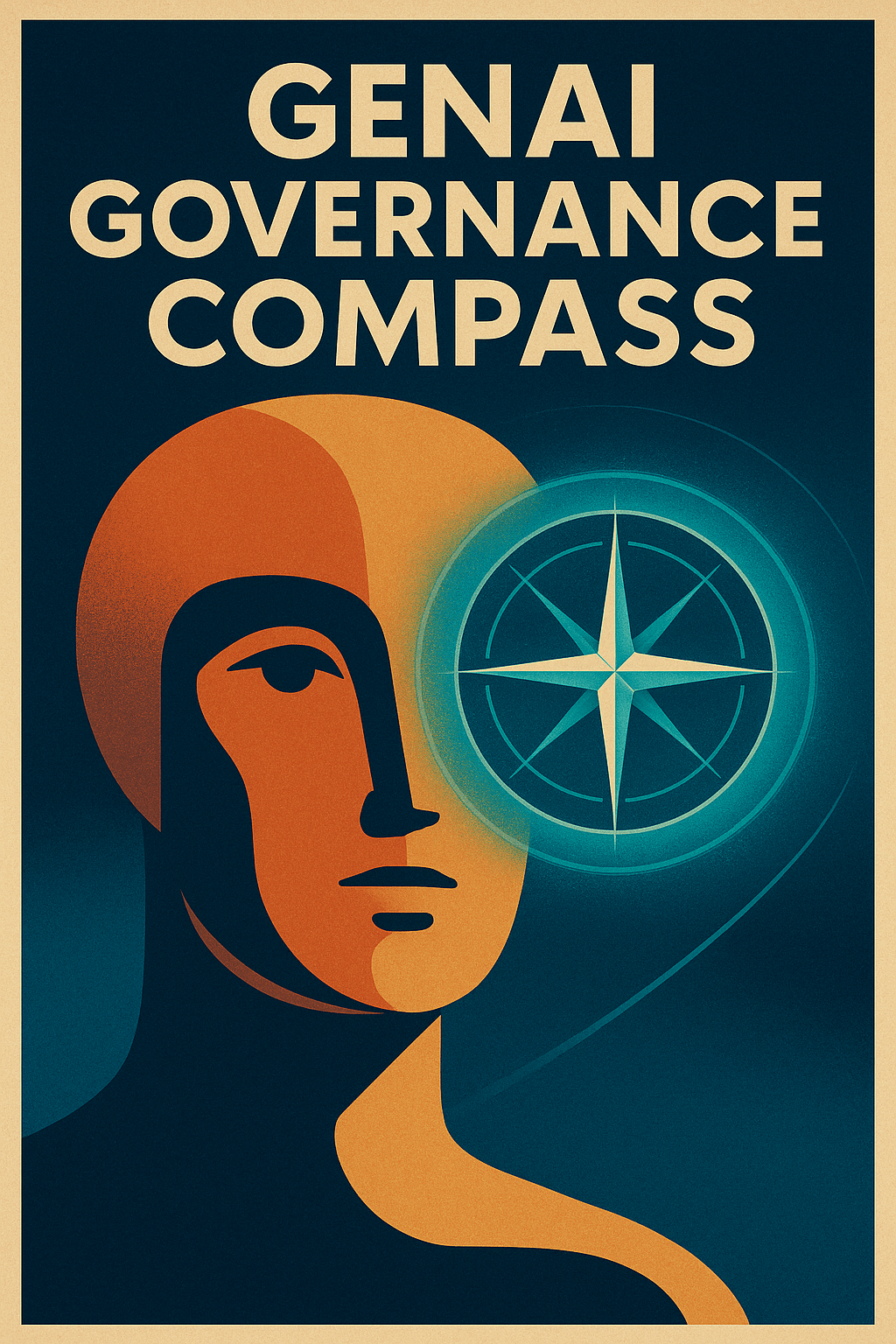

  • 🧭 WiBrief GenAI Governance Compass

    🧭 WiBrief GenAI Governance Compass

    Benchmark your readiness. Navigate responsible innovation.

    As organisations race to adopt generative AI, the difference between thriving and stumbling isn’t just technology—it’s governance. This self-check tool enables leaders, teams, and innovators to evaluate current practices, identify gaps, and set a principled course for trustworthy, high-impact AI adoption.

    Use this Compass to align your strategy, processes, and culture with the standards that will define tomorrow’s most trusted organisations.


    1. Clear Purpose and Role Definition

    • Are the objectives, boundaries, and expected outcomes of your project explicitly documented?
    • Are all key roles (owners, validators, reviewers) clearly assigned and communicated?

    2. Structured Idea Capture

    • Is there an open, documented process for collecting and recording new use cases, challenges, or improvements from all stakeholders?
    • Are proposed ideas logged transparently in a central repository?

    3. Responsible Prototyping and Risk Awareness

    • Are new ideas moved quickly from concept to draft—while identifying risks, data requirements, and oversight needs at each step?
    • Is there a framework for assessing risk and value before scaling or deployment?

    4. Independent Validation

    • Does each major output undergo review by a qualified expert or peer, independent from its creator?
    • Are feedback cycles documented, with a clear record of decisions and improvements?

    5. Transparent Feedback and Iteration

    • Is regular review and retrospective discussion built into the process, ensuring that lessons and concerns are surfaced and addressed?
    • Are critical issues or deviations flagged early and managed transparently?

    6. Auditable Oversight

    • Are oversight and validation steps clearly documented and visible to all relevant parties—including clients, where appropriate?
    • Is there traceability of decision points and interventions throughout the lifecycle?

    7. Continuous Self-Audit and Reflection

    • Are outcomes periodically assessed and reported, both for successes and learning opportunities?
    • Is there a culture of open reflection, transparency, and accountability around both achievements and setbacks?

    Self-Assessment (Rate 1–5 for Each Area)

    • 1 = Not evident
    • 3 = Partially in place
    • 5 = Fully embedded

    Scoring Guide:

    • 30–35: Governance Pioneer – Strong, consistent frameworks support trusted, resilient innovation.
    • 22–29: Progressing – Key governance elements present; targeted improvements will enhance trust.
    • 15–21: Developing – Governance is emerging but uneven; focused attention required.
    • Below 15: At Risk – Gaps may expose the organisation to avoidable risks and erode stakeholder trust.

    Reflection & Next Steps

    • Which governance area is your greatest strength—and which needs the most urgent attention?
    • What practical action can you take this quarter to strengthen your governance baseline?
    • Consider sharing your results (anonymously or otherwise) to contribute to a wider culture of transparency and improvement.

    #WiBrief #Governance #AITrust #LegalInnovation #SelfAudit #Accountability #ProfessionalServices


    Explore related WiBrief research

    Put the governance questions into a broader context by exploring our Autonomy and AI research hub. Experience the trade-offs directly in the interactive Autonomy Atlas.

  • 🌍 🔑Unlock AI’s Potential: Your Essential Guide to Public Tools for Ethical Innovation and Compliance

    🌍 🔑Unlock AI’s Potential: Your Essential Guide to Public Tools for Ethical Innovation and Compliance

    🚀 Artificial Intelligence (AI) is not just changing the game—it’s transforming the entire playing field. 🌍 From healthcare breakthroughs to smarter financial systems, AI is driving innovation and efficiency at an unprecedented pace. But with this rapid advancement comes a crucial responsibility: ensuring that AI is used ethically, safely, and within the bounds of robust regulatory frameworks.

    This page is your comprehensive guide to some of the most powerful, publicly accessible AI tools. Here, you’ll uncover the cutting-edge functionalities of these tools, explore their potential risks, and understand the regulatory frameworks that will help you navigate this complex and dynamic field. Whether you’re a developer, researcher, or AI enthusiast, this guide is designed to keep you informed and ahead of the curve.

    🔍 Category🛠️ AI Tool/Platform💡 Description🌟 Why It Matters📜 Regulatory Considerations🔗 Learn More
    🔓 Open-Source AI ModelsHugging FaceA hub for community-driven models and datasets now featuring integrations with GPT-4.5 and advanced multimodal models.Democratizes AI innovation and enables collaborative development across industries.Supports ethical open-source licensing and aligns with emerging global transparency standards.🔗 Visit Hugging Face
    Stable Diffusion 3.0The latest diffusion model that generates high-quality images with improved text-to-image coherence.Empowers creative industries and commercial applications with cost-effective, rapid image generation.Requires strict adherence to updated copyright and ethical guidelines for content generation.🔗 Explore Stable Diffusion 3.0
    BLOOM 2.0A multilingual transformer with enhanced efficiency and transparency in training methods.Bridges linguistic and cultural gaps, fostering global collaboration in AI research.Operates under Responsible AI Licences that meet international fairness and transparency standards.🔗 Explore BLOOM 2.0
    🧠 Large Language Models (LLMs)GPT-5 (OpenAI)Next-generation model integrating chain-of-thought reasoning and multimodal inputs with enhanced efficiency.Revolutionizes content creation and complex problem solving with unified pipelines and cost-effective APIs.Must adhere to evolving guidelines on bias, transparency, and data privacy as part of global AI assurance efforts.🔗 Explore GPT-5
    Claude (Anthropic)An ethically aligned LLM with enhanced bias mitigation and robust safety features.Prioritizes user safety and trust, making it ideal for applications requiring high ethical standards.Operates under stringent ethical guidelines and regulatory frameworks focused on fairness and accountability.🔗 Access Claude
    🖼️ Multimodal ModelsSORA 2.0An advanced multimodal model that processes text, images, and video in real time with enhanced integration.Transforms digital media by enabling seamless synthesis of diverse data modalities for innovative applications.Must comply with updated intellectual property and content creation regulations while following AI assurance protocols.🔗 Learn about SORA 2.0
    ⚙️ Specialized AI ApplicationsLangChain & AutoGenFrameworks that integrate multiple AI models into cohesive, multi-agent workflows for complex tasks.Enhance operational efficiency and enable scalable automation across enterprises.Designed to meet global regulatory standards on transparency and algorithmic accountability.🔗 Learn about LangGraph & AutoGen
    Rightbrain.aiA no-code/low-code platform for rapidly deploying integrated AI workflows in enterprise settings.Enables businesses to prototype and deploy AI solutions quickly, reducing time-to-market and operational costs.Incorporates robust data security and compliance features aligned with evolving international standards.🔗 Explore Rightbrain.ai
    🔊 Text-to-Speech & Voice ModelsSpeechVerse 2.0An upgraded speech model offering real-time transcription and high-fidelity voice synthesis.Breaks communication barriers and enhances accessibility across diverse user demographics.Ensures strict compliance with data protection and privacy laws governing voice data.🔗 Learn about SpeechVerse 2.0
    🎥 Text-to-Video / Image-to-VideoImageBind 2.0 (Meta AI)An advanced model capable of synthesizing video from text and images, supporting six simultaneous modalities.Transforms media production by enabling realistic video synthesis for entertainment and enterprise use.Requires adherence to international copyright and content moderation standards.🔗 Learn about ImageBind 2.0
    📚 Authoritative Research ForumsArxiv.orgA premier source for accessing real-time updates on cutting-edge AI research and preprints.Drives innovation by making state-of-the-art academic research accessible to both practitioners and regulators.Widely referenced in global regulatory discussions and research initiatives.🔗 Explore AI Research on Arxiv
    🛡️ AI Assurance & RegulationAI Assurance (UK Govt.)Guidelines ensuring that AI systems operate safely, transparently, and ethically across industries.Builds consumer trust and supports organizations in meeting stringent global regulatory standards.Aligned with updated UK and international AI assurance and governance frameworks.🔗 Introduction to AI Assurance
    🔐 Global Regulation TrackerWhite & Case AI WatchA dynamic platform tracking AI regulatory developments across the globe, including updates from the US, EU, and China.Essential for businesses navigating diverse, rapidly evolving international regulatory landscapes.Offers real-time insights into legislative changes and compliance strategies worldwide.🔗 Explore Global AI Regulation Tracker
    🔧 AI Development ToolsMicrosoft AutoGenA framework for creating autonomous multi-agent AI applications, facilitating complex workflows and agentic interactions.Streamlines development of sophisticated AI systems, enabling rapid prototyping and deployment at enterprise scale.Built with robust security and compliance protocols, meeting evolving industry and regulatory best practices.🔗 Explore Microsoft AutoGen
    🔗 Integration & Data Platformsn8nAn open-source workflow automation tool offering both cloud and self-hosted deployment to integrate multiple APIs and services.Streamlines business process automation and data integration, bridging disparate systems seamlessly.Ensures secure data handling and compliance with data protection regulations in both cloud and offline environments.🔗 Visit n8n
    🔗 Integration & Data PlatformsFirestoreA fully managed NoSQL cloud database that supports real-time updates and automatic scaling for big data applications.Facilitates efficient data storage and retrieval for scalable AI applications and real-time analytics.Operates under stringent cloud data security standards and compliance frameworks (e.g., GDPR, HIPAA).🔗 Learn about Firestore
    🔗 Integration & Data PlatformsVector Databases (Pinecone, Milvus, Weaviate)Managed and open-source vector databases designed for similarity search and handling high-dimensional big data for AI applications.Enable efficient processing of large-scale data for machine learning and real-time semantic search.Must comply with data privacy and security regulations, offering both cloud-based and self-hosted deployment options.🔗 Explore Vector Databases
    💻 Dedicated AI HardwareNvidia Jetson NanoA compact, energy-efficient edge AI platform designed for on-device inference and robotics applications.Empowers real-time, offline AI processing at the edge, critical for autonomous systems and IoT devices.Requires secure hardware configurations and compliance with regional data processing regulations for edge devices.🔗 Learn about Jetson Nano


    Put the tools into context

    A useful AI tool is not automatically a reliable decision-maker. Explore how assistants are configured, how to evaluate their consequences and why clear governance matters.