Category: Liability

  • Redefining Liability: Navigating Tort Law in the Age of Autonomous Vehicles

    Redefining Liability: Navigating Tort Law in the Age of Autonomous Vehicles

    As autonomous vehicles (AVs) become more prevalent, the UK’s legal framework for vehicle liability is evolving rapidly. With the Automated Vehicles Act 2024 (AV Act) now in force, lawmakers are re-examining traditional tort law principles to address the complexities of self-driving technology. This transformation underscores the urgent need for a legal system that can keep pace with the rapid advancements in vehicle automation.

    A New Legal Landscape for Autonomous Vehicles

    In the UK, the “harm-based” law of torts has long governed liability for vehicle accidents, supported by legislation such as the Road Traffic Act 1988. However, as control shifts from humans to algorithms in more advanced vehicle automation, the legal landscape must adapt. The AV Act, which received Royal Assent in May 2024, introduces a comprehensive framework designed to tackle these emerging challenges.

    The AV Act clearly distinguishes between “user-in-charge” (UiC) and “no-user-in-charge” (non-UiC) scenarios, where vehicles operate independently without human intervention. This distinction is crucial, as it clarifies liability in the event of an accident—whether it falls on the driver, the manufacturer, or the software provider. The act specifically designates an “authorised self-driving entity” (ASDE) as the party responsible for ensuring that an AV meets all safety and operational standards, thereby shifting liability away from human drivers when the vehicle operates autonomously(Taylor Wessing, Bird & Bird |International Law Firm).

    The Role of the Automated Vehicles Act

    The Automated Vehicles Act 2024 marks a significant milestone in the regulation of self-driving cars in the UK. Building on previous legislation, such as the Automated and Electric Vehicles Act 2018 (AEVA), the new act goes further by addressing earlier laws’ limitations. It establishes a more rigorous safety framework, requiring AVs to meet safety standards that are equivalent to or higher than those of a competent human driver before they are permitted on public roads.

    Moreover, the AV Act sets up a new regime for the approval and ongoing monitoring of AVs. Vehicles must pass a self-driving test and remain under continuous oversight throughout their operational life. This approach ensures that they stay safe and comply with road rules, even as they undergo software updates and other modifications(GOV.UK,Law Commission).

    Balancing Innovation and Accountability

    As AV technology rapidly advances, it brings new ethical and legal concerns. For instance, when an autonomous car’s decision-making algorithm causes an accident, who bears the responsibility? The AV Act addresses this issue by making the ASDE legally accountable for the vehicle’s actions during non-UiC operations. This shift in liability from the human driver to the manufacturer or software provider represents a significant departure from traditional tort law(Bird & Bird | International Law Firm).

    The act also introduces stringent consumer protection measures, including regulations on how AVs can be marketed. These measures aim to prevent consumers from being misled about a vehicle’s capabilities, ensuring they understand the difference between fully autonomous systems and those requiring human intervention.

    Conclusion

    As the UK approaches the mainstream adoption of autonomous vehicles, its legal system must continue to evolve. The Automated Vehicles Act 2024 plays a critical role in this evolution, providing a clear framework for liability and safety in a world where self-driving cars are becoming the norm. By addressing the legal and ethical challenges posed by AV technology, the UK positions itself as a global leader in the autonomous vehicle sector, ensuring that innovation is balanced with accountability and public safety.


    Explore related WiBrief research

    The questions about responsibility raised by autonomous vehicles now appear in workplaces and software agents. Explore the wider picture in the Autonomy and AI research hub. Experience the trade-offs directly in the interactive Autonomy Atlas.
  • A Road Map for Driverless Cars: The UK’s Accelerated Journey Towards Autonomy in 2026

    A Road Map for Driverless Cars: The UK’s Accelerated Journey Towards Autonomy in 2026

    The year 2026 is poised to be a watershed moment for the UK’s automotive landscape12, with fully driverless cars potentially hitting the roads. This acceleration, propelled by the groundbreaking Automated Vehicles Act of 2024, marks a significant leap forward in the evolution of transportation.

    A closer look at the latest industry reports and legislative developments unveils a detailed roadmap of what to expect as this technology revolutionises our roads.

    Phases of Integration: A Gradual Revolution

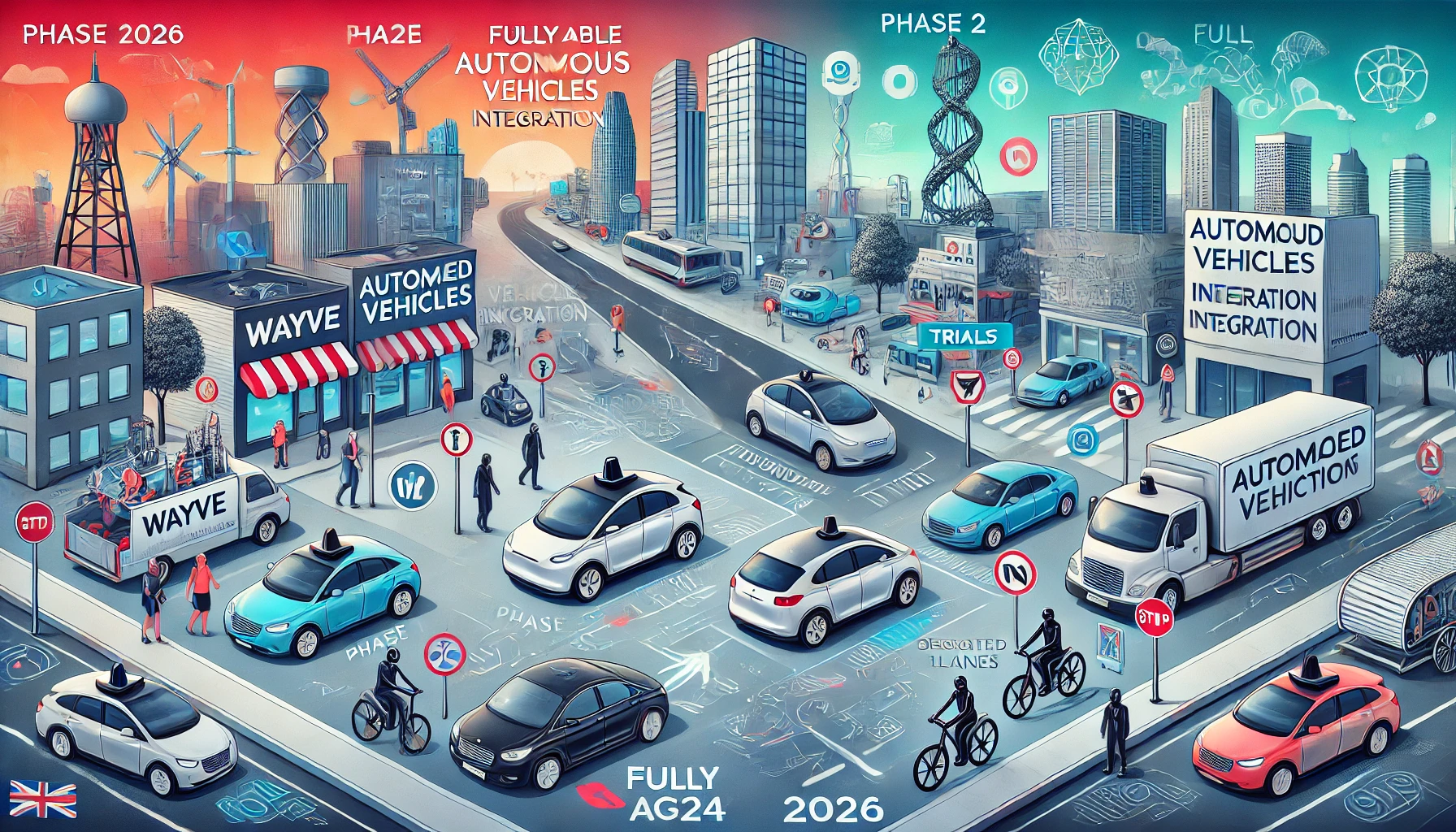
    Phase 1: Building Trust with Overridable Self-Driving Cars Initially, we will witness the introduction of “overridable” self-driving cars. These vehicles will empower human drivers to intervene and take control in situations where the AI system may falter. This crucial first phase serves a dual purpose: it allows the public to gradually acclimate to the technology while simultaneously gathering invaluable real-world data to refine the AI’s capabilities.

    Phase 2: Embracing Full Autonomy As confidence in the technology solidifies and overridable self-driving cars become ubiquitous, the stage will be set for the second phase: the deployment of fully autonomous, non-overridable vehicles. These cars will operate independently, ushering in a new era of transportation that promises enhanced safety, reduced congestion, and improved accessibility.

    Navigating the Transition: Addressing Human and Machine Errors

    The path to a fully autonomous future is not without its challenges. One of the most pressing concerns is the potential for both human and machine errors during this transitional period.

    Human Error:
    The Persistent Challenge Human error remains a leading cause of road accidents in the UK, contributing to a staggering 88% of collisions. Distracted driving, fatigue, and impaired driving are just a few examples of the human factors that jeopardise road safety. While self-driving cars aim to eliminate these risks, the transition period presents a unique challenge in handover scenarios, where drivers may need to suddenly resume control.

    Machine Error: The Imperfections of Technology Self-driving cars, while promising, are not infallible. Manufacturing defects and design flaws can lead to malfunctions, even in meticulously crafted vehicles. Rigorous testing and stringent quality control measures are paramount to mitigating these risks.

    The UK’s Pioneering Efforts: Trials and Regulations3

    The UK has taken a proactive stance in embracing this technological revolution. Companies like Wayve and Oxa are already conducting trials in urban environments, paving the way for a driverless future. These trials operate under a strict code of practice that mandates human supervision, ensuring safety and addressing initial concerns.

    The Way Forward: A Multifaceted Approach

    To ensure a seamless and safe transition to fully autonomous vehicles, a multifaceted approach is essential:

    Enhanced Testing and Validation: Continuous rigorous testing under diverse conditions is crucial to identify and rectify potential defects.

    Public Awareness and Education: Educating the public about the capabilities and limitations of self-driving technology will foster acceptance and responsible usage.

    Robust Regulatory Oversight: Stringent regulations must be developed and enforced to ensure high safety standards and hold manufacturers accountable.

    Infrastructure Adaptation: Upgrading road infrastructure to accommodate autonomous vehicles, including dedicated lanes and intelligent traffic systems, will be vital.

    Conclusion: A Safer, More Efficient Future Beckons

    The UK’s forward-thinking approach, exemplified by the Automated Vehicles Act, positions the nation at the forefront of the autonomous vehicle revolution. By addressing both human and machine errors head-on, the UK is paving the way for a future where fully autonomous, safe roadways are a reality. This transformation has the potential to save countless lives, revolutionise transportation, and create a more efficient and accessible society for all.

    1. https://www.gov.uk/government/news/self-driving-vehicles-set-to-be-on-roads-by-2026-as-automated-vehicles-act-becomes-law ↩︎
    2. https://www.topgear.com/car-news/tech/self-driving-cars-could-be-uk-roads-2026-after-new-law-signed ↩︎
    3. GOV.UK)​​ (Enterprise Technology News and Analysis)​​ (Top Gear)​. ↩︎

    Explore related WiBrief research

    Compare this early autonomous-vehicle roadmap with how AI agents are shifting control and accountability today in the Autonomy and AI research hub. Experience the trade-offs directly in the interactive Autonomy Atlas.