Tag: AI governance

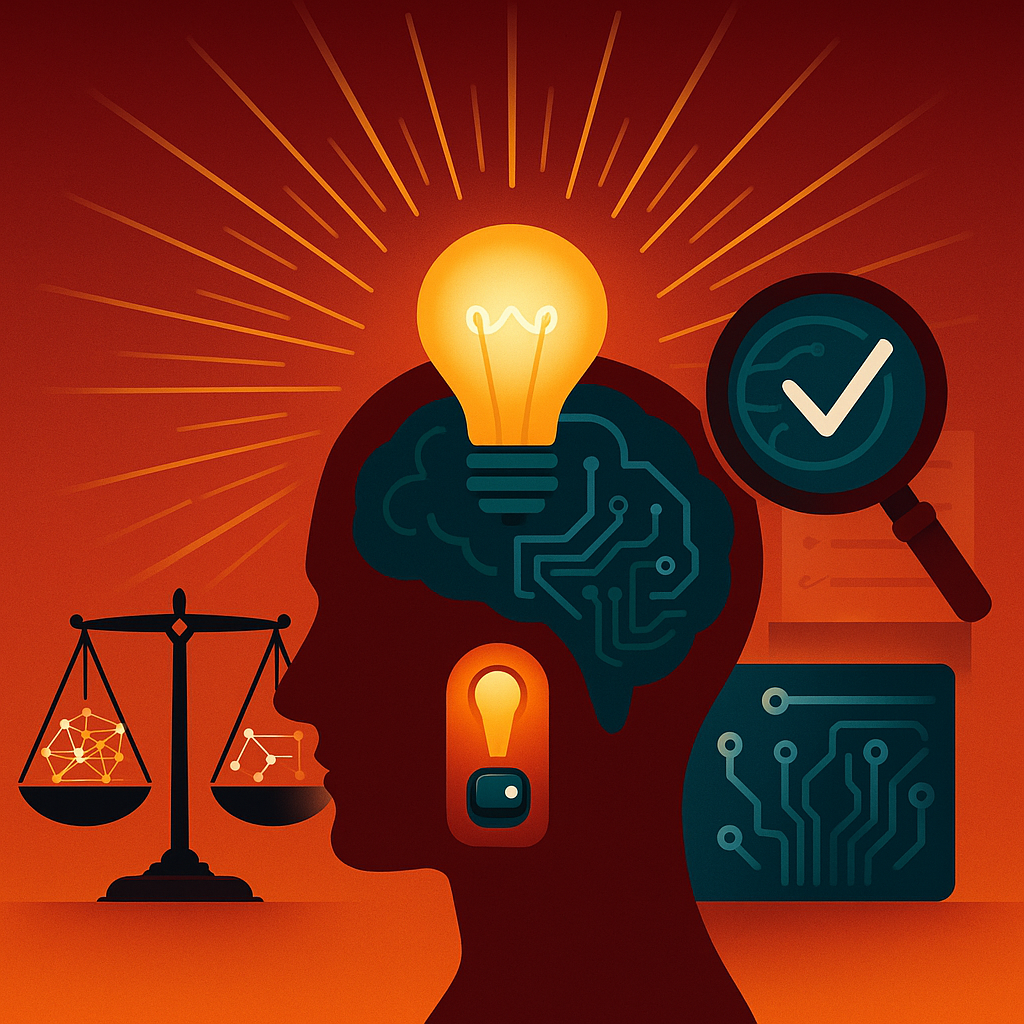
  • 💡 Beyond the Prompt: Why Strategic Judgment Remains Our Greatest Asset

    💡 Beyond the Prompt: Why Strategic Judgment Remains Our Greatest Asset

    TL;DR

    As GenAI digital assistants—such as Microsoft Copilot, vendor-specific versions of ChatGPT, and internal firm models—embed themselves into legal workflows, the question is no longer “Should I use AI?” It’s: How do we design it to enhance—not override—judgment? The future of professional services depends not just on what AI can do, but on how we choose to think.

    ⚖️ From Oversight to Ownership

    In professional services, our value has never been just in what we know—but in how we frame, filter, and challenge complexity. The rise of GenAI digital assistants doesn’t erase that—it raises the stakes.

    Because even if:

    • AI proposes a new content and structure based on your parameters,
    • Ranks risk based on frameworks you define,
    • Surfaces insights drawn from analogue experience…

    The question remains:

    Are you still making the key decisions—or just reviewing what the system has already prioritised for you?

    This is what I call judgment drift—not losing control outright, but gradually letting automated systems decide what matters most in professional decisions—without continuous, active human evaluation for real-world relevance.

    🔍 A Real-World Example

    AI can quickly scan hundreds of pages and flag six familiar risks—termination clauses, liability caps, change-of-control provisions. But what about the seventh? The one that doesn’t follow the usual pattern. The clause phrased just differently enough, buried in boilerplate, or introduced in passing by a counterparty. That’s the one the model might miss—and the one a sharp human spots, because it feels off.

    In high-stakes negotiations, using GenAI to draft too early can give the illusion of a well-framed position—when in reality, it’s just a statistically likely one. That false confidence can lock you into assumptions on liability, pricing, or responsibility—before you’ve aligned the output with your client’s goals, strategy, or leverage.

    The result? Time saved, but oversight lost.

    That’s why the goal isn’t automation for its own sake. It’s intelligent delegation—with human judgment guiding what to review, when to slow down, and where to challenge the default.


    ✨
    Story Moment: Friday Evening. 900 Pages. No Panic.

    You’ve lived this.

    It’s late Friday. A critical deliverable just landed—a 900-page document, a dataset, a transaction report. It needs to be reviewed, structured, and summarised by Monday.

    Old world? Two team members brace for a lost weekend. New world? Your organisational GenAI assistant processes the file, extracts what matters, flags inconsistencies, and delivers a structured first-draft summary—in your specified standard format—before you even log off.

    You’re not replacing expertise. You’re reclaiming it—for strategy, not survival.


    🛠️
    What Should Professional Services Do Next?

    1. Shift from Passive Tool Use to Active Role Design

    Don’t just use AI—author it. Define the assistant’s role, purpose, tone, steps to perform and boundaries. Gen AI tools perform better when shaped by clear context and intentional structure—not guesswork.

    2. Preserve Cognitive Friction

    Build in moments to pause, question, and challenge what the Gen AI system returns. Good judgment doesn’t come from seamless flow—but from thoughtful interruption.

    3. Create Frameworks Worth Scaling

    Treat every effective Gen AI setup as a blueprint—and build from there. Curate prompts that work, regardless of the platform. Adapt and improve them.Document the logic. Share the method.Build systems others can trust—and scale.


    🧭
    Why This Matters

    GenAI is no longer speculative—it’s operational.

    The professionals who will lead this shift aren’t the ones who use AI fastest. They’re the ones who ask:

    • What’s being missed?
    • Who is really in control?
    • Does this support or replace my judgment?

     and most importantly:

    Is it amplifying your expertise—or quietly eroding the very judgment your clients rely on?

    #StrategicJudgment #GenAI #HumanInTheLoop #LegalInnovation #AIAndEthics


    Continue exploring

    Human judgement becomes even more important as autonomous systems move from recommending actions to carrying them out. Explore the Autonomy and AI research hub, and investigate decision authority in the interactive Autonomy Atlas.

  • Top 10 Predictions Shaping Legal, AI & Human Agency (2025–2028)

    Top 10 Predictions Shaping Legal, AI & Human Agency (2025–2028)

    Top 10 Predictions Shaping Legal, AI & Human Agency (2025–2028)


    TL;DR

    As GenAI remakes the legal and professional landscape, the competitive edge is shifting from mere automation to intentional, governed innovation. The winners will be those who embed robust oversight, transparent validation, and dynamic governance frameworks into the very fabric of their work—reclaiming human agency and public trust.


    1. Human Oversight as a Competitive Service

    By 2028, “human oversight” will be as marketable as legal expertise or technological prowess. Clients will increasingly demand visible, auditable proof of where, when, and how critical human judgment is applied—spanning from contracts to compliance reviews. “Oversight-as-a-Service” will become a selling point, with governance models showcased in RFPs and public disclosures.


    2. Governance Becomes the DNA of Innovation

    No longer a compliance afterthought, governance moves to centre stage—shaping not just what gets built, but how it’s built, tested, and scaled. Law firms and legal tech teams will institutionalise dynamic governance: real-time feedback loops, champion validation, transparent escalation protocols, and proactive audit trails. This enables both safe experimentation and trusted adoption.


    3. Strategic Cognitive Offloading Defines Talent Value

    The most valued professionals will not just use AI, but demonstrate discernment—knowing when to offload to machines and when to intervene as a human. Expect advancement frameworks to explicitly reward this judgment, codified through governance structures that track, review, and continuously recalibrate the human-AI handoff.


    4. Kitemarked Outputs and Visible Validation

    “Human Oversight Certified” seals and similar kitemarks will become compliance baselines in legal, audit, and high-risk advisory work. These markers, only awarded through transparent, traceable validation frameworks, will be a sign of trust—not mere decoration.


    5. The Return of ‘Slow Work’—By Design, Not Default

    To counteract the deskilling risks of automation, leading firms will set up deliberate slow lanes: protected time and space for deep legal analysis, mentorship, and creative reasoning. These slow work zones will be governed for quality—tracked and measured, not left to chance.


    6. Outcome-Based Pricing—Driven by Transparent Process

    AI-enabled productivity will accelerate the move away from the billable hour. Value-based pricing will require transparency about how work is delivered—AI, human, or hybrid—and governance documentation that clients can review.


    7. Living Sensemaking Hubs Replace Static Knowledge Bases

    Platforms like WiBrief will move from static content to living foresight engines, integrating scenario modeling, prediction scoring, and transparent governance of how insights are generated and validated. This continual auditability will be a marker of platform trust.


    8. Public Self-Audit and Transparent Reflection

    Annual self-audits, open prediction scoring, and reflective learning cycles will become professional norms. Firms will publicise both successes and misses—anchoring trust in governed humility, not just glossy marketing.


    9. Bias Exposure Drives Radical Transparency in Legal Advice

    AI will illuminate unseen biases in both algorithmic and human outputs. The most trusted organisations will not just acknowledge this risk, but embed bias detection and remediation in their governance models, making correction and learning as visible as outcomes.


    10. Leadership Redefined: From Command to Coherence

    The new leaders will not be those who control more AI, but those who engineer coherence—integrating ethical frameworks, oversight rituals, and transparent governance into every layer of decision-making. Strategic enablement sprints, champion-driven reviews, and participatory governance will distinguish cultures that thrive.


    The Golden Thread:

    In every prediction above, robust governance is not a box to tick—it is the architecture of trust. The firms and professionals who make their frameworks visible, participatory, and continuously evolving will shape the next decade—not just by what they predict, but by how they keep themselves accountable to those predictions.

    🧭 Ready to benchmark your own approach? Explore the WiBrief GenAI Governance Compass — a practical, self-assessment framework to help leaders, teams, and organisations navigate responsible GenAI adoption and innovation.


    Big Question for 2025–2028:

    Are you just adopting GenAI—or are you building a living system where innovation, judgment, and governance rise together?


    #LegalInnovation #Governance #AI #HumanOversight #Prediction #KPMG #WiBrief #Trust #ProfessionalServices #Ethics #DigitalTransformation


    Explore related WiBrief research

    Explore an interactive demonstration of these decisions and discover how authority shifts in the Autonomy and AI research hub. Experience the trade-offs directly in the interactive Autonomy Atlas.

  • 🌍 🔑Unlock AI’s Potential: Your Essential Guide to Public Tools for Ethical Innovation and Compliance

    🌍 🔑Unlock AI’s Potential: Your Essential Guide to Public Tools for Ethical Innovation and Compliance

    🚀 Artificial Intelligence (AI) is not just changing the game—it’s transforming the entire playing field. 🌍 From healthcare breakthroughs to smarter financial systems, AI is driving innovation and efficiency at an unprecedented pace. But with this rapid advancement comes a crucial responsibility: ensuring that AI is used ethically, safely, and within the bounds of robust regulatory frameworks.

    This page is your comprehensive guide to some of the most powerful, publicly accessible AI tools. Here, you’ll uncover the cutting-edge functionalities of these tools, explore their potential risks, and understand the regulatory frameworks that will help you navigate this complex and dynamic field. Whether you’re a developer, researcher, or AI enthusiast, this guide is designed to keep you informed and ahead of the curve.

    🔍 Category🛠️ AI Tool/Platform💡 Description🌟 Why It Matters📜 Regulatory Considerations🔗 Learn More
    🔓 Open-Source AI ModelsHugging FaceA hub for community-driven models and datasets now featuring integrations with GPT-4.5 and advanced multimodal models.Democratizes AI innovation and enables collaborative development across industries.Supports ethical open-source licensing and aligns with emerging global transparency standards.🔗 Visit Hugging Face
    Stable Diffusion 3.0The latest diffusion model that generates high-quality images with improved text-to-image coherence.Empowers creative industries and commercial applications with cost-effective, rapid image generation.Requires strict adherence to updated copyright and ethical guidelines for content generation.🔗 Explore Stable Diffusion 3.0
    BLOOM 2.0A multilingual transformer with enhanced efficiency and transparency in training methods.Bridges linguistic and cultural gaps, fostering global collaboration in AI research.Operates under Responsible AI Licences that meet international fairness and transparency standards.🔗 Explore BLOOM 2.0
    🧠 Large Language Models (LLMs)GPT-5 (OpenAI)Next-generation model integrating chain-of-thought reasoning and multimodal inputs with enhanced efficiency.Revolutionizes content creation and complex problem solving with unified pipelines and cost-effective APIs.Must adhere to evolving guidelines on bias, transparency, and data privacy as part of global AI assurance efforts.🔗 Explore GPT-5
    Claude (Anthropic)An ethically aligned LLM with enhanced bias mitigation and robust safety features.Prioritizes user safety and trust, making it ideal for applications requiring high ethical standards.Operates under stringent ethical guidelines and regulatory frameworks focused on fairness and accountability.🔗 Access Claude
    🖼️ Multimodal ModelsSORA 2.0An advanced multimodal model that processes text, images, and video in real time with enhanced integration.Transforms digital media by enabling seamless synthesis of diverse data modalities for innovative applications.Must comply with updated intellectual property and content creation regulations while following AI assurance protocols.🔗 Learn about SORA 2.0
    ⚙️ Specialized AI ApplicationsLangChain & AutoGenFrameworks that integrate multiple AI models into cohesive, multi-agent workflows for complex tasks.Enhance operational efficiency and enable scalable automation across enterprises.Designed to meet global regulatory standards on transparency and algorithmic accountability.🔗 Learn about LangGraph & AutoGen
    Rightbrain.aiA no-code/low-code platform for rapidly deploying integrated AI workflows in enterprise settings.Enables businesses to prototype and deploy AI solutions quickly, reducing time-to-market and operational costs.Incorporates robust data security and compliance features aligned with evolving international standards.🔗 Explore Rightbrain.ai
    🔊 Text-to-Speech & Voice ModelsSpeechVerse 2.0An upgraded speech model offering real-time transcription and high-fidelity voice synthesis.Breaks communication barriers and enhances accessibility across diverse user demographics.Ensures strict compliance with data protection and privacy laws governing voice data.🔗 Learn about SpeechVerse 2.0
    🎥 Text-to-Video / Image-to-VideoImageBind 2.0 (Meta AI)An advanced model capable of synthesizing video from text and images, supporting six simultaneous modalities.Transforms media production by enabling realistic video synthesis for entertainment and enterprise use.Requires adherence to international copyright and content moderation standards.🔗 Learn about ImageBind 2.0
    📚 Authoritative Research ForumsArxiv.orgA premier source for accessing real-time updates on cutting-edge AI research and preprints.Drives innovation by making state-of-the-art academic research accessible to both practitioners and regulators.Widely referenced in global regulatory discussions and research initiatives.🔗 Explore AI Research on Arxiv
    🛡️ AI Assurance & RegulationAI Assurance (UK Govt.)Guidelines ensuring that AI systems operate safely, transparently, and ethically across industries.Builds consumer trust and supports organizations in meeting stringent global regulatory standards.Aligned with updated UK and international AI assurance and governance frameworks.🔗 Introduction to AI Assurance
    🔐 Global Regulation TrackerWhite & Case AI WatchA dynamic platform tracking AI regulatory developments across the globe, including updates from the US, EU, and China.Essential for businesses navigating diverse, rapidly evolving international regulatory landscapes.Offers real-time insights into legislative changes and compliance strategies worldwide.🔗 Explore Global AI Regulation Tracker
    🔧 AI Development ToolsMicrosoft AutoGenA framework for creating autonomous multi-agent AI applications, facilitating complex workflows and agentic interactions.Streamlines development of sophisticated AI systems, enabling rapid prototyping and deployment at enterprise scale.Built with robust security and compliance protocols, meeting evolving industry and regulatory best practices.🔗 Explore Microsoft AutoGen
    🔗 Integration & Data Platformsn8nAn open-source workflow automation tool offering both cloud and self-hosted deployment to integrate multiple APIs and services.Streamlines business process automation and data integration, bridging disparate systems seamlessly.Ensures secure data handling and compliance with data protection regulations in both cloud and offline environments.🔗 Visit n8n
    🔗 Integration & Data PlatformsFirestoreA fully managed NoSQL cloud database that supports real-time updates and automatic scaling for big data applications.Facilitates efficient data storage and retrieval for scalable AI applications and real-time analytics.Operates under stringent cloud data security standards and compliance frameworks (e.g., GDPR, HIPAA).🔗 Learn about Firestore
    🔗 Integration & Data PlatformsVector Databases (Pinecone, Milvus, Weaviate)Managed and open-source vector databases designed for similarity search and handling high-dimensional big data for AI applications.Enable efficient processing of large-scale data for machine learning and real-time semantic search.Must comply with data privacy and security regulations, offering both cloud-based and self-hosted deployment options.🔗 Explore Vector Databases
    💻 Dedicated AI HardwareNvidia Jetson NanoA compact, energy-efficient edge AI platform designed for on-device inference and robotics applications.Empowers real-time, offline AI processing at the edge, critical for autonomous systems and IoT devices.Requires secure hardware configurations and compliance with regional data processing regulations for edge devices.🔗 Learn about Jetson Nano


    Put the tools into context

    A useful AI tool is not automatically a reliable decision-maker. Explore how assistants are configured, how to evaluate their consequences and why clear governance matters.

  • Generative AI and the Future of Work: A Paradigm Shift

    Generative AI and the Future of Work: A Paradigm Shift

    The future of work isn’t coming; it’s here, and generative AI is its architect. This powerful technology, capable of creating content from data inputs, is poised to reshape industries, redefine job roles, and fundamentally alter how we approach work. As we stand on the brink of this new era, it’s crucial to understand the implications and prepare for the future.

    The Rise of Generative AI: A Creative Disruption

    Generative AI isn’t just a buzzword; it’s a creative disruption. From automating mundane tasks to generating imaginative content, its applications are vast and rapidly expanding. By 2030, McKinsey predicts that 30% of hours worked today could be automated, signaling a significant shift in the labor landscape. Imagine AI-powered legal research tools that analyse vast amounts of data in seconds, a task that would take human lawyers hours. Or marketing teams collaborating with AI to craft compelling campaigns tailored to individual preferences. The possibilities are boundless​ (McKinsey & Company)​​ (McKinsey & Company)​.

    Phases of Integration: A Gradual Revolution

    Augmentation and Overridable Systems: In the initial phase, AI will primarily augment human tasks, boosting productivity and efficiency. AI-powered tools will handle repetitive tasks, freeing up human workers to focus on more complex and creative endeavors​ (Deloitte United States)​.

    Full Autonomy and Transformation: As AI matures, it will move towards full autonomy, fundamentally altering job roles and creating new career paths. While some jobs may be displaced, AI will also generate new opportunities in fields like AI ethics, data analysis, and machine learning engineering​ (IMF)​.

    Navigating the Challenges: A Human-AI Partnership

    The transition to an AI-powered workplace presents both opportunities and challenges:

    Human Error and Adaptation: Human oversight remains essential, particularly in situations requiring critical thinking and ethical judgment. Upskilling and reskilling programs will be vital to ensure workers can adapt to new roles and collaborate effectively with AI systems​ (McKinsey & Company)​.

    Machine Error and Reliability: AI systems are not foolproof. They require rigorous testing, monitoring, and continuous improvement to ensure reliability and accuracy. Organizations must establish robust governance frameworks to manage AI-related risks​ (World Economic Forum)​.

    The Future Workforce: Skills for the AI Age

    The rise of generative AI will necessitate a shift in workforce skills. Technical skills like programming and data analysis will be in high demand, but so will “soft skills” like critical thinking, creativity, and emotional intelligence. These uniquely human skills will become increasingly valuable as AI takes on routine tasks​ (McKinsey & Company)​​ (World Economic Forum)​.

    Preparing for the Future: Embracing the AI Revolution

    To thrive in the age of generative AI, individuals and organisations must embrace a growth mindset and prioritise continuous learning. Here’s what you can do:

    • Embrace Lifelong Learning: Invest in developing new skills and knowledge to stay ahead of the curve.
    • Foster Adaptability: Be open to change and willing to take on new challenges.
    • Cultivate Creativity: Focus on tasks that require human ingenuity and problem-solving skills.
    • Build Strong Interpersonal Skills: Effective communication and collaboration will be crucial in an AI-powered workplace.

    Generative AI has the potential to revolutionise the world of work, but it’s up to us to shape this future. By embracing change, investing in human capital, and prioritising ethical considerations, we can create a future where AI serves as a powerful tool for human empowerment and innovation.


    What does the future of work look like now?

    Revisit this earlier discussion alongside WiBrief’s more recent examination of AI agents and the changing responsibilities of people and organisations.