Tag: Self-Driving cars

  • Redefining Liability: Navigating Tort Law in the Age of Autonomous Vehicles

    Redefining Liability: Navigating Tort Law in the Age of Autonomous Vehicles

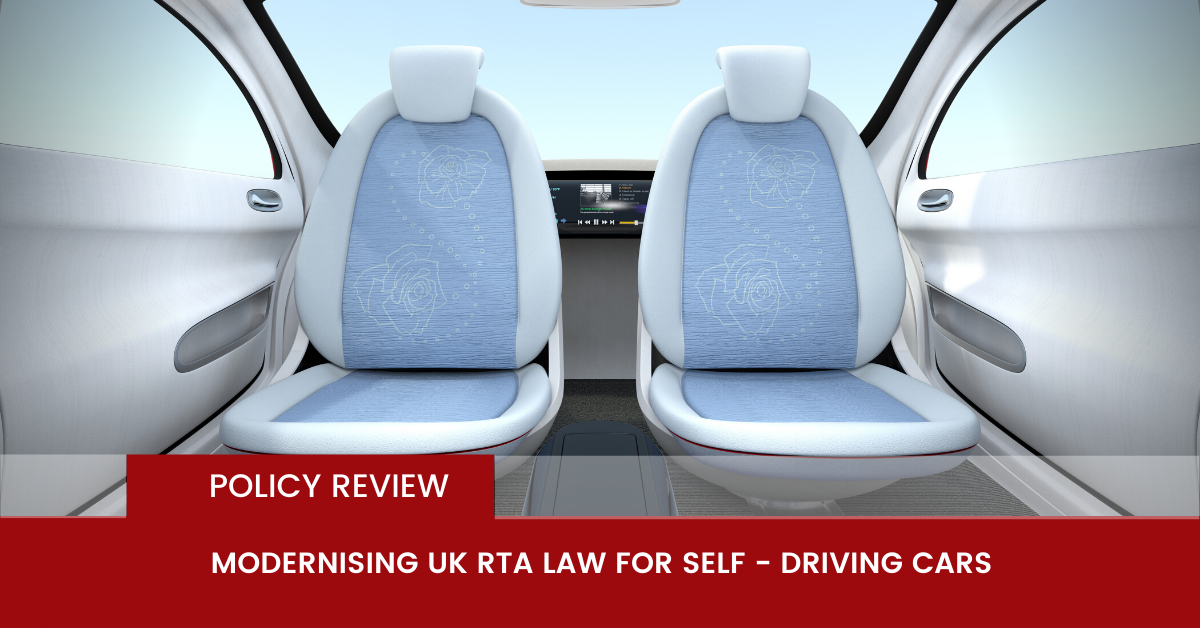
    As autonomous vehicles (AVs) become more prevalent, the UK’s legal framework for vehicle liability is evolving rapidly. With the Automated Vehicles Act 2024 (AV Act) now in force, lawmakers are re-examining traditional tort law principles to address the complexities of self-driving technology. This transformation underscores the urgent need for a legal system that can keep pace with the rapid advancements in vehicle automation.

    A New Legal Landscape for Autonomous Vehicles

    In the UK, the “harm-based” law of torts has long governed liability for vehicle accidents, supported by legislation such as the Road Traffic Act 1988. However, as control shifts from humans to algorithms in more advanced vehicle automation, the legal landscape must adapt. The AV Act, which received Royal Assent in May 2024, introduces a comprehensive framework designed to tackle these emerging challenges.

    The AV Act clearly distinguishes between “user-in-charge” (UiC) and “no-user-in-charge” (non-UiC) scenarios, where vehicles operate independently without human intervention. This distinction is crucial, as it clarifies liability in the event of an accident—whether it falls on the driver, the manufacturer, or the software provider. The act specifically designates an “authorised self-driving entity” (ASDE) as the party responsible for ensuring that an AV meets all safety and operational standards, thereby shifting liability away from human drivers when the vehicle operates autonomously(Taylor Wessing, Bird & Bird |International Law Firm).

    The Role of the Automated Vehicles Act

    The Automated Vehicles Act 2024 marks a significant milestone in the regulation of self-driving cars in the UK. Building on previous legislation, such as the Automated and Electric Vehicles Act 2018 (AEVA), the new act goes further by addressing earlier laws’ limitations. It establishes a more rigorous safety framework, requiring AVs to meet safety standards that are equivalent to or higher than those of a competent human driver before they are permitted on public roads.

    Moreover, the AV Act sets up a new regime for the approval and ongoing monitoring of AVs. Vehicles must pass a self-driving test and remain under continuous oversight throughout their operational life. This approach ensures that they stay safe and comply with road rules, even as they undergo software updates and other modifications(GOV.UK,Law Commission).

    Balancing Innovation and Accountability

    As AV technology rapidly advances, it brings new ethical and legal concerns. For instance, when an autonomous car’s decision-making algorithm causes an accident, who bears the responsibility? The AV Act addresses this issue by making the ASDE legally accountable for the vehicle’s actions during non-UiC operations. This shift in liability from the human driver to the manufacturer or software provider represents a significant departure from traditional tort law(Bird & Bird | International Law Firm).

    The act also introduces stringent consumer protection measures, including regulations on how AVs can be marketed. These measures aim to prevent consumers from being misled about a vehicle’s capabilities, ensuring they understand the difference between fully autonomous systems and those requiring human intervention.

    Conclusion

    As the UK approaches the mainstream adoption of autonomous vehicles, its legal system must continue to evolve. The Automated Vehicles Act 2024 plays a critical role in this evolution, providing a clear framework for liability and safety in a world where self-driving cars are becoming the norm. By addressing the legal and ethical challenges posed by AV technology, the UK positions itself as a global leader in the autonomous vehicle sector, ensuring that innovation is balanced with accountability and public safety.


    Explore related WiBrief research

    The questions about responsibility raised by autonomous vehicles now appear in workplaces and software agents. Explore the wider picture in the Autonomy and AI research hub. Experience the trade-offs directly in the interactive Autonomy Atlas.

  • The 6 Stages of Autonomous Driving Explained (SAE Levels)

    The 6 Stages of Autonomous Driving Explained (SAE Levels)

    A Brief introduction

    Fasten your seatbelts and get ready to explore the fascinating world of self-driving cars! The Society of Automotive Engineers (SAE) has defined six distinct levels of automation, each representing a milestone on the road to a driverless future. Let’s take a closer look at what these levels mean for you and the future of transportation.

    Icon–Description
    Diagram introducing the six SAE levels of driving automation0No Automation: This is the familiar territory of most cars on the road today. You’re the captain of your ship, making all the decisions, from turning the steering wheel to hitting the brakes. While your car might have some helpful features like lane departure warnings or automatic emergency braking, you’re still the one in charge.
    Diagram illustrating Level 0 driving automation, where the human driver retains control1Driver Assistance: At Level 1, your car begins to offer a helping hand. Technologies like adaptive cruise control, which maintains a safe distance from the vehicle ahead, or lane-keeping assist, which gently nudges you back into your lane, provide limited assistance. However, you remain fully responsible for the vehicle’s operation and must stay alert and engaged.
    Diagram illustrating Level 1 driver assistance with human responsibility2Partial Automation: Level 2 takes automation a step further, allowing the car to control both steering and acceleration/deceleration simultaneously. Tesla’s Autopilot and Cadillac’s Super Cruise are prime examples of this level. While these systems offer enhanced convenience and safety, the driver must remain attentive and ready to take over at any moment.
    Diagram illustrating Level 2 partial driving automation and required driver attention3Conditional Automation: This is where the magic of true self-driving begins. Level 3 vehicles can perform all driving tasks under certain conditions, such as on well-marked highways or in low-speed traffic. You can relax and let the car do the work, but you must be prepared to take control when the system requests it. Honda’s Legend, available in Japan, is the first commercially available Level 3 car.
    Diagram illustrating Level 3 conditional driving automation and human takeover4High Automation: Imagine a car that can navigate busy city streets, drop you off at your destination, and then find a parking spot all on its own. Level 4 vehicles can handle most driving tasks in specific environments, like geo-fenced areas or under favorable weather conditions. Waymo’s self-driving taxis, operating in select cities, exemplify this level of autonomy.
    Diagram illustrating Level 4 high automation in defined driving conditions5Full Automation: This is the ultimate goal of the self-driving revolution. Level 5 vehicles are fully autonomous, capable of navigating any road, in any weather, without any human intervention. They won’t even have steering wheels or pedals. While this technology is still under development, companies like Cruise and Argo AI are actively working on bringing it to reality (What could possible go wrong?).
    The Six stages of automation Diagram

    The UK’s Autonomous Journey

    The UK is at the forefront of the self-driving revolution, with the government actively supporting the development and testing of autonomous vehicles. The Automated Vehicles Act, passed in 2024, establishes a legal framework for the safe deployment of self-driving cars on UK roads. This includes provisions for insurance, liability, and safety standards.

    Companies like Wayve and Oxa1 are conducting trials of self-driving vehicles in London and Oxford, paving the way for a future where autonomous taxis and delivery vehicles could become commonplace. However, public acceptance remains a key challenge, with concerns about safety and job displacement.

    The Road Ahead

    The journey toward fully autonomous vehicles is fraught with challenges, including technical hurdles, regulatory issues, and public acceptance. However, the potential benefits are immense, from increased safety and reduced traffic congestion to improved mobility for the elderly and disabled.

    By understanding the six levels of automation, you can better appreciate the progress that has been made and the exciting possibilities that lie ahead. Whether you’re an early adopter or a cautious observer, the future of transportation is undeniably autonomous. The UK’s proactive approach to legislation and ongoing trials positions it as a leader in this transformative technology, with the potential to revolutionize how we travel and interact with our cities.

    1. https://www.bbc.co.uk/news/uk-england-oxfordshire-67890403#:~:text=The%20test%20car%20travelled%20around,vehicle%20to%20be%20self%2Ddriving. ↩︎

    Explore related WiBrief research

    Autonomous driving laid the groundwork for today’s questions about AI agents. Explore the wider framework in our Autonomy and AI research hub. Experience the trade-offs directly in the interactive Autonomy Atlas.