Important: historical guidance (2021). Drone regulations and registration requirements have changed since this article was published, including changes in 2026. Do not rely on the rules below to plan a flight today. Check the current UK Civil Aviation Authority Drone and Model Aircraft Code for up-to-date safety and legal requirements.
Someone has just very generously gifted you a Drone and you are excited to try it out. You and the Drone are both charged and ready to venture out on your first test flight to the smooth backdrop of Sinatra.
Teeming with ideas you step outside. Suddenly however, you remember, that actually, you don’t really know anything about flying Drones. In the UK, their use is also highly regulated. Sinatra fades away into the sunset as reality slowly dawns in.
As the affordability and sales of drones have gone up, so have concerns about their safety. A history of near misses and various accidents (involving aeroplanes and stadiums) have helped bring rising drone ownership to the spotlight. Unfortunately, the underlying law behind their use hasn’t been as popular.
It’s important to know and understand your legal obligations. Having to undertake all of the research yourself however, might appear daunting, but our team at WiredBrief have taken the trouble of doing all of the legwork for for you.
What We’ll cover
Our breakdown of the fundamentals of Drone Ownership in the UK which also includes best practice tips for safe responsible flight, will help you quickly understand your main legal obligations. We’ll particularly be focusing on the 2021 UK drone laws (introduced 31st December 2020), and your duties under the Civilian Aviation Authority (CAA) Air Navigation Order (ANO) 2016 and the Drone code. Whether you’re a commercial or recreational user, it’s going to be important to remember that because of the new changes, the rules and regulations are the same for everyone.
Drone Usage and affordability – Private v Commercial use
Drones can be bought easily and cheaply both online and on the high street. They can be affordably priced and range from as low as £100 – £10000, depending on your uses and reasons for buying one. Drones can be fun and used for recreation. Alternatively, they can also have a large range of more practical, commercial business uses. You can observe some of these in the below contexts:

Building Safety Inspections 
Express Shipping 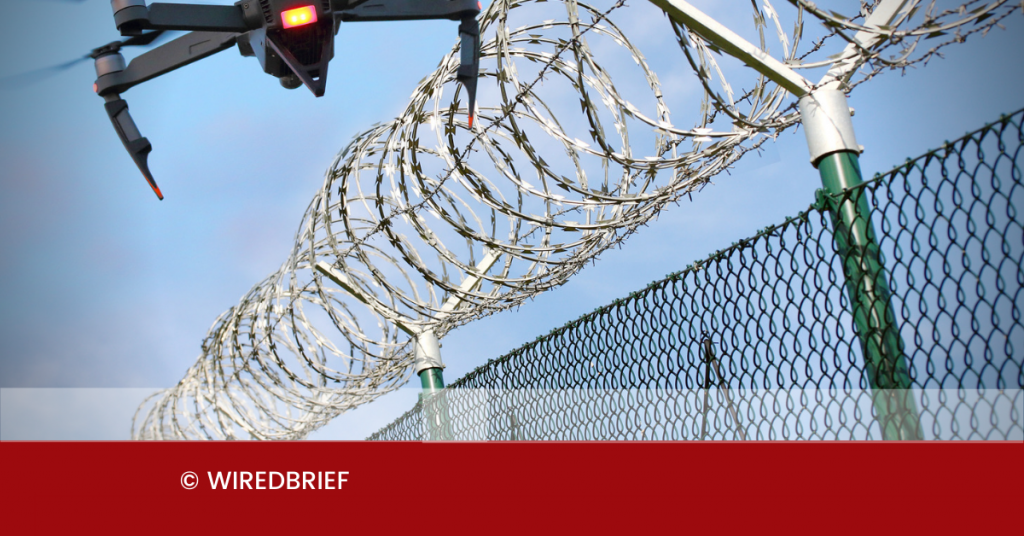
Drone border control surveillance 
Geographic mapping of inaccessible terrain and locations 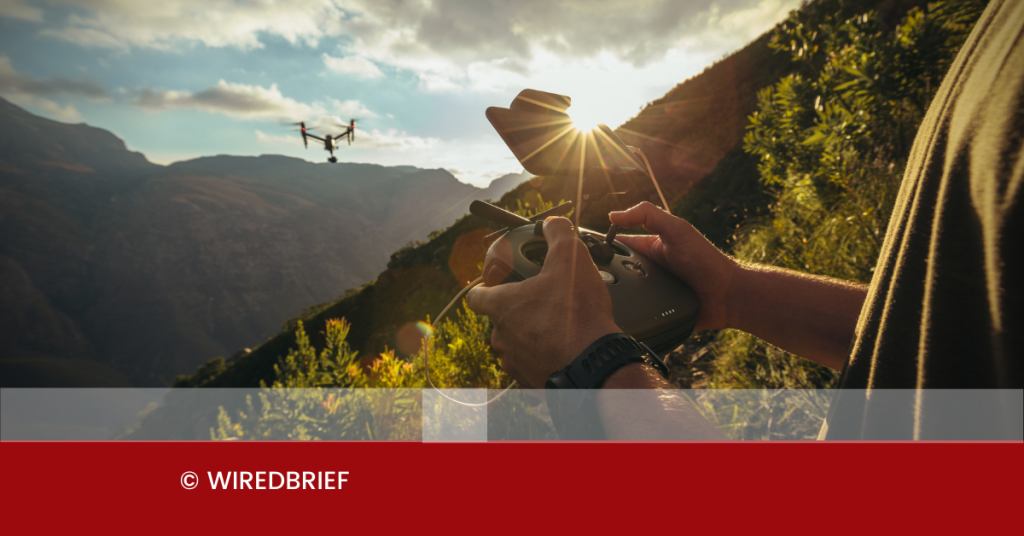
Aerial photography for journalism and film 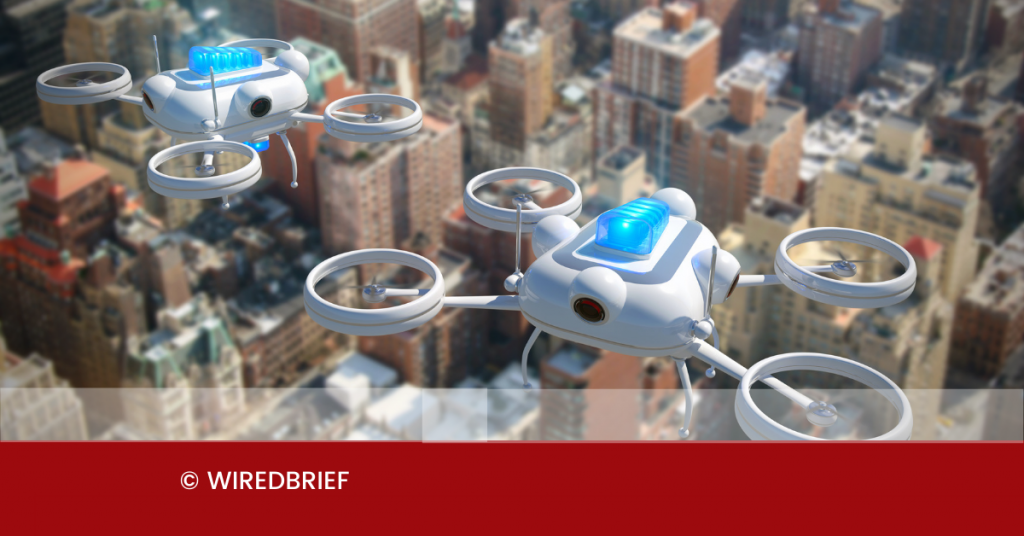
Law enforcement using Drones 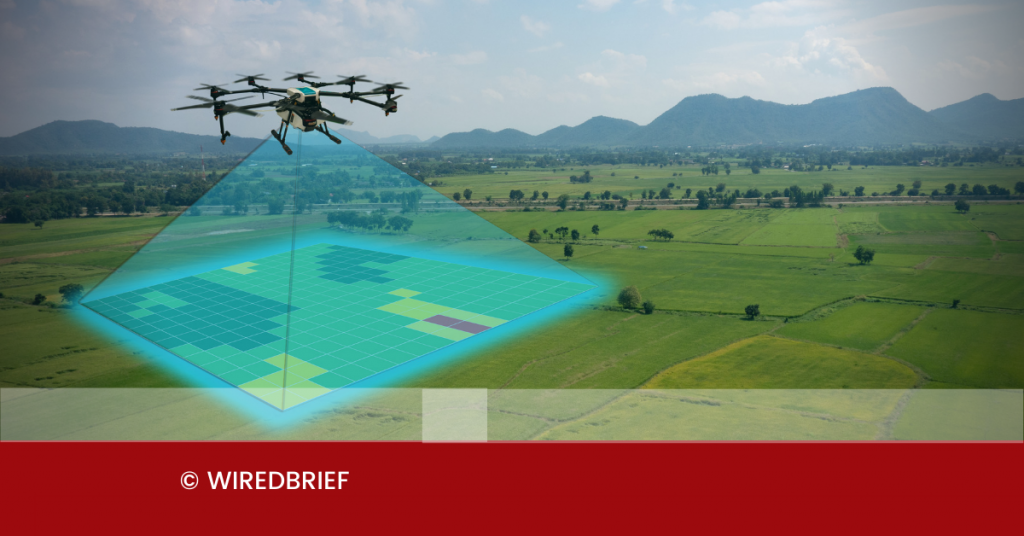
Precision Drone crop monitoring 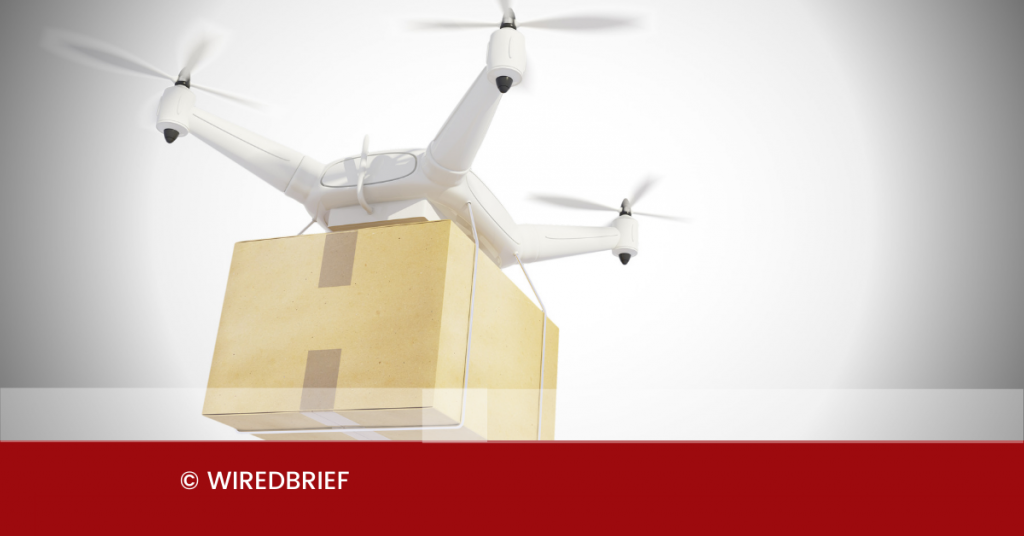
Unmanned Drone cargo transport
The issue with Drone ownership; turbulent start and near misses
Unfortunately, whilst obtaining a Drone might be relatively straightforward, flying one legally and safely is far more tricky. Recently, Drone owners have seen a spate of accidents, that have involved collisions and near misses with commercial airlines. As a result, the need for ensuring greater public safety has led to calls for stricter measures, ensuring Drone operators exercise sufficient caution.
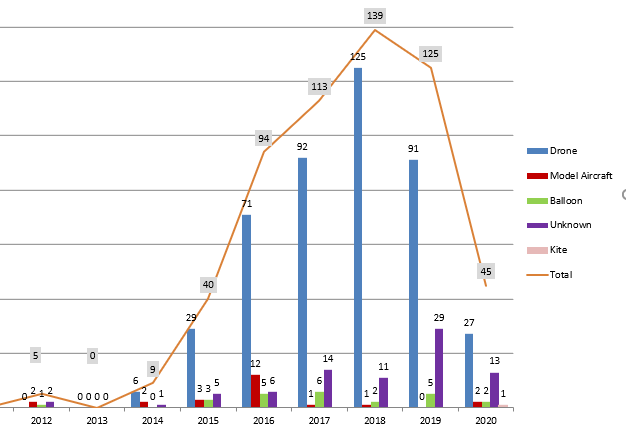
Drones being operated at high altitudes (typically over a 1000 feet), or close to airfields have been a big part of the problem. The UK AirProxBoard, who collect statistics in this area reported how in 2018 drone incidents rose by more than a third. These numbers have fallen since, possibly due to tighter regulation, but they are still above the expected range. The 2020 COVID pandemic has also meant more grounded commercial airline operations, resulting in fewer sightings.
Some of the most common reasons for Drone accidents and some safety precautions which you could take are outlined below:
- Lack of Flight Training
Solution: If you have never flown a Drone before then its important as a new user, you try to increase your understanding of Drones before going outside. Reading your Drone owners manual, watching YouTube videos and practicing are all things you can do to make your flying safer. - No pre – flight Check up
Drone operators, should always do a pre flight check up, to reduce the likelihood of in air emergencies. It’s important to check things like 1.) Battery power and 2.) calibration, secure battery placement and RC antennae signal connection. - Flying in Poor weather
This one goes without saying, but ALWAYS make sure weather conditions are suitable for your planned flight. Strong winds can knock your Drone out of the air, as well as rain and Ice which can cause irreparable internal and external damage to your craft!
The Law
The Civilian Aviation Authority (CAA) Air Navigation Order (ANO) 2016 is the main legislation governing aircrafts, including drones, in the UK. This has now been amended by the Air Navigation (Amendment) Order 2020, which attempts to streamline drone law to make the system more understandable – guidance to the updates are provided by the CAA here. The main provision you’ll need to be aware of from the ANO is Article 241 (concerning endangering the safety of any person or property). This applies to every aviation activity at all times and sets out that:
“[a] person must not recklessly or negligently cause or permit an aircraft to endanger any person or property”.
Before 31st December 2020, it also used to be important for the purposes of determining whether you needed a licence, to also know whether the purpose of a drone flight was commercial or non – commercial. However, this has since changed and the new focus looks at the risk that each flight represents. The greater the risk, the more rigorous the requirements will be for training and certifications. Whilst a summary of your key obligations can be found within the Drone Code here, we’ve summarised some of the key information below.
The main risk factors that are used in the updated regulations to determine how risk is categorised and which registration requirements are needed are outlined below:
How the updated regulations determine risk
| Image | Risk Factors | Description |
 | Weight | Of your drone (including accessories) |
 | People Proximity from people | How close the drone will fly near (‘uninvolved people’) people not directly involved with the flight |
 | Proximity from cities | How close the drone will fly near built up areas (e.g towns, cities, industrial areas, recreational areas etc.) |
Drone operations will typically fall into one of three categories as follows:
The three new categories of Drone operations
| Risk | Category | Description | CAA Application required? |
| Low | Open Category |
| No – Operations can be carried out in accordance with basic pre-defined characteristics and not subject to further authorisation requirements from CAA |
| Medium | Specific Category | – Greater risk than Open category, or – one or more elements of the operation fall outside the boundaries of the Open category. | Yes – Operational authorisation required from the CAA, based on a safety risk assessment. |
| High | Certified Category | – equivalent risk to that of manned aviation, resulting in operations falling under similar regulatory regime (i.e., certification of the aircraft, certification of the operator, licensing of the pilot) Examples include: – Passenger / transportation dangerous goods | Yes – Equivalent requirements to manned aviation. |
Most uses will typically now fall under the open category and as of 31st December 2020, those who fall into this category will be able to do the following:
Summary of where most Drone uses fall
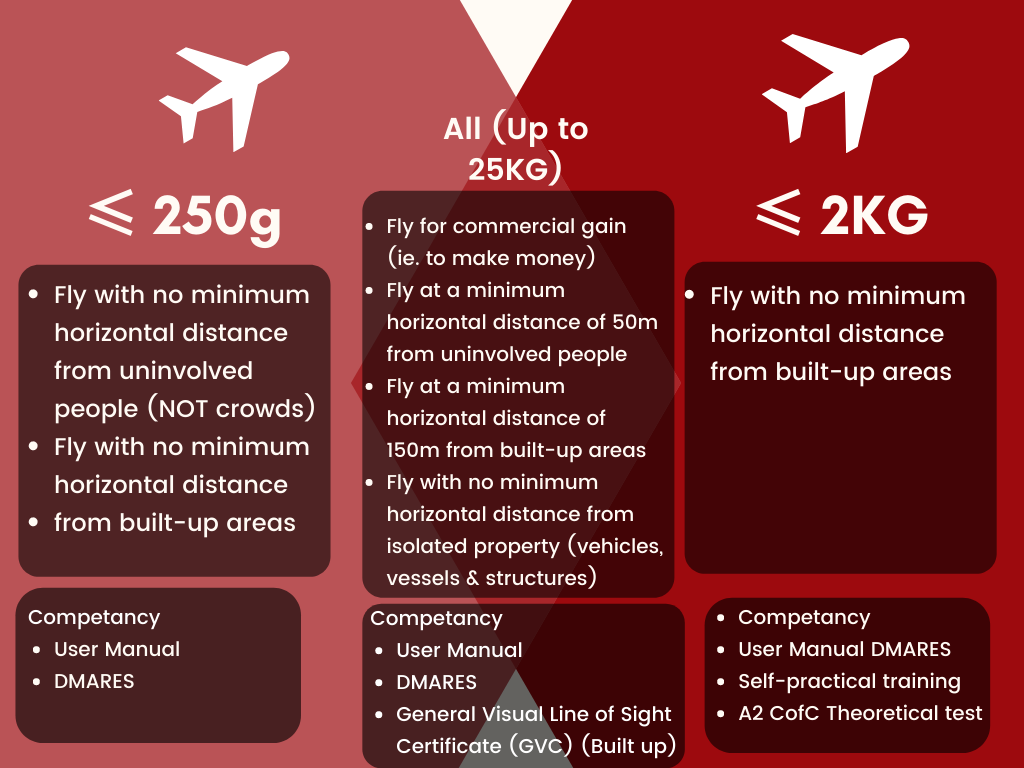
Operations in Open Category Summary 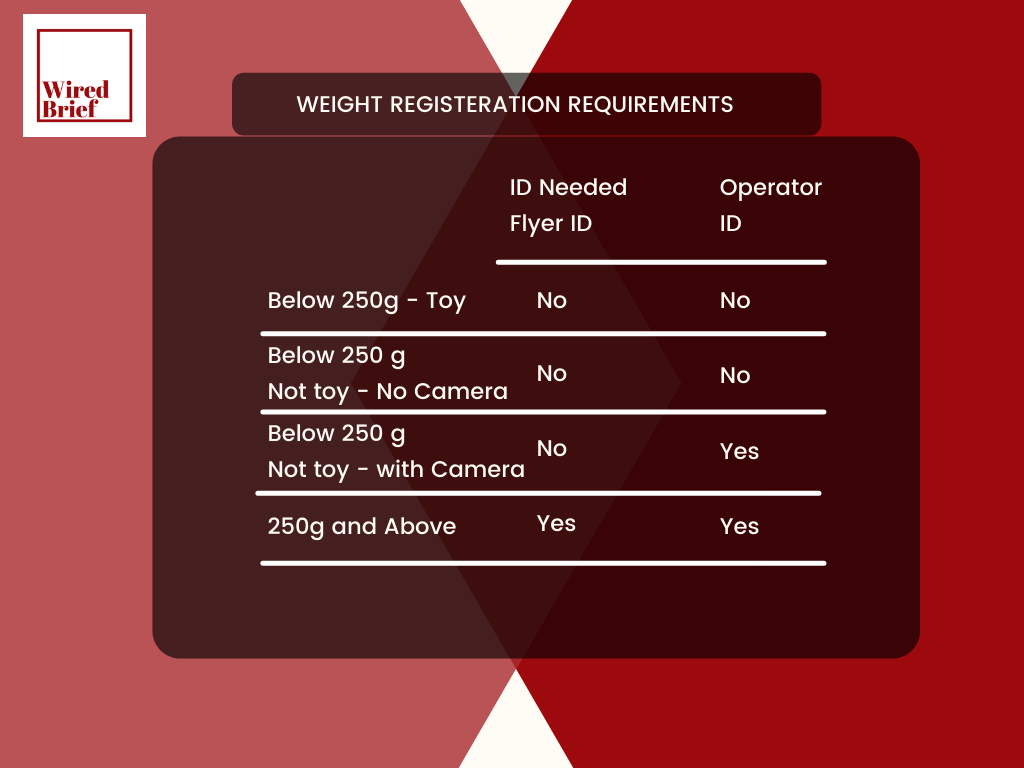
Drone Registration: Click Here
What about Insurance?
Insurance is optional if you’re flying a drone under 20kg for recreation. However, you should remember that you’re responsible for your actions, which means you could be held personally liable for any injury or damage you cause while you’re flying. If your flight is for any reason other than recreation, you do need insurance. EC785/2004 compliant insurance is still required for commercial operations in both the Open and Specific categories.
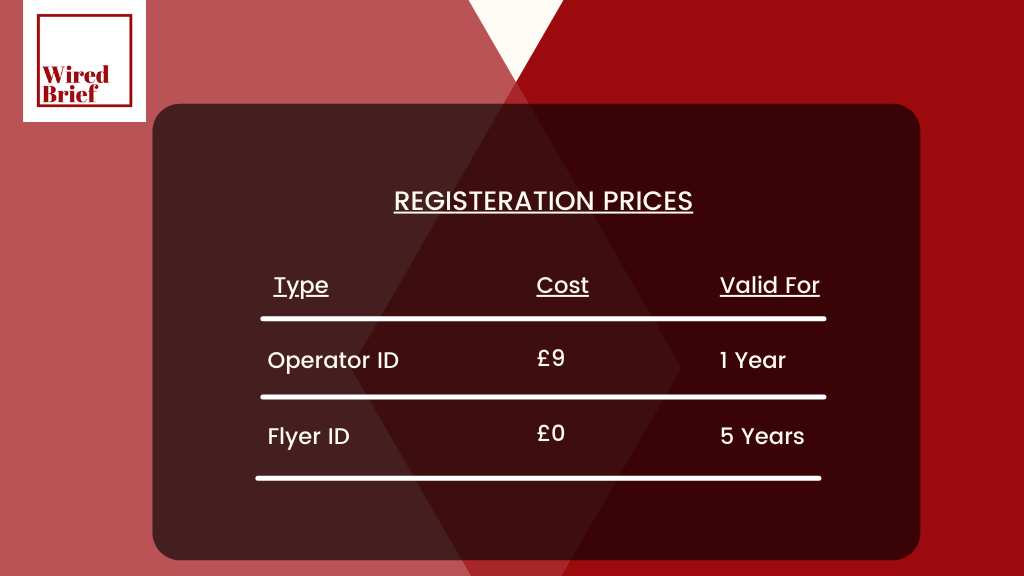
Please not that it is against the law to fly a drone or model aircraft without having the required IDs. You can also be fined for breaking the law when flying. In the most serious cases, you could be sent to prison.
ID Registration prices
Strict Liability on the ground – Relaxed in the air
Last but not least, we look at the question of Liability for Drone operators. This predominantly concerns the question of where the accident has taken place. For example, section 76 of the CAA applies strict owner or operator liability for surface damage, caused by an aircraft. This can include injury to an individual or damage to property. If you are the Drone owner or operator then you would automatically be at fault for any loss or injury.
Unless there is contributory negligence to be alleged, the victim would be entitled compensation. Their mission would be to identify and pursue a case against you as the Drone operator. A common challenge however is finding the address of the offender and ensuring they have sufficient insurance / assets.
In the event of an air-to-air incident, the established principle is not to apportion blame on a strict liability basis. Each incident will thus dealt with case by case and the necessary elements of fault will need to be proven.
Drones and AI – The next frontier
Now you know the fundamentals of Drone usage and law in the UK we hope you will join us for our next article. There, we will be examining the technologies next evolution, brought about by combining Drones with artificial intelligence in commercial contexts.
As we move away from the need to have human operators at the helm of drone flights, we stand to benefit from greater efficiency and more complex Drone uses that can benefit future society. Unlike humans, Drones powered by AI will be able to work all year round without breaks, and in stressful environments without requiring sick days. This paves the way for many commercial opportunities, alongside potential risks. An assessment of both will be important as it will help us understand the future and fundamentally, any social effects brought about by these developments.
Getting started toolkit:
Article Takeaways:
- The Civilian Aviation Authority (CAA) Air Navigation Order (ANO) 2016 govern Drone law in the UK
- As of 31st December 2020, the same rules apply for both commercial and non commercial users.
- Most uses fall within the Open category, but the higher the risk posed to the general public the more likely your use will fall outside of the open category. If you have any doubts, it’s important that you do your research and understand your obligations.
- A full summary of all of the latest regulatory updates to UK drone law can be found here: Click Here
- EC785/2004 compliant insurance is required for commercial operations in both the Open and Specific categories
- The UK Government has removed the minimum age requirement for remote pilots operating in the Open and Specific categories. The competency requirements however are unchanged.
- Under the ANO you must not recklessly or negligently cause or allow a Drone to endanger any person or property
- Strict liability applies for Drone to surface damage but for Air to Air the courts will look for fault.